In May, after months of internal debate about how to deflate ballooning student GPAs, Harvard faculty voted to cap the number of A grades given to undergraduates at roughly 20 percent per course. The vote reflected a growing belief among professors that grades at Harvard have become practically meaningless. More than 60 percent of letter grades given to undergraduates during the 2024-25 school year were A’s, a recent report found, up from 24 percent two decades earlier.
Harvard’s decision brought renewed national attention to an issue contributing to a growing sense of public disillusionment with higher education. Data from Brown and Yale show, like Harvard, A’s represent around 60 percent of grades given to undergrads. Rising honors cutoffs for cum laude, magna cum laude, and summa cum laude honors at Duke and Columbia hint at similarly eye-popping statistics.
Dartmouth, too, faces significant grade inflation. The average undergraduate GPA increased from about 3.32 to 3.52 from 2004 to 2018, according to a report from the registrar published in The Dartmouth. The picture since then is murky, because unlike many of its peers, Dartmouth doesn’t make much of its grading data public. However, faculty members who have seen internal data say that A’s now represent well more than half of all grades given to undergraduates. Grades are rising rapidly enough that the GPA required to earn honors has risen as well. Graduates in the class of 2018 needed a GPA of 3.91 to receive summa cum laude; by last year, the cutoff had risen to 3.97.
That grades have risen at Dartmouth isn’t a matter of debate. What’s less clear is the impact the trend is having on undergraduate learning. Many argue that a proliferation of easy A’s has undermined students’ incentive to work hard while making it more difficult for professors to provide feedback. Others suggest outrage about grade inflation is a red herring and that rising GPAs are of little consequence for student outcomes. How the College might address the problem is not obvious, either. Dartmouth and other schools have attempted to curb grade inflation in the past with mixed success—but Harvard’s crackdown underscores a growing urgency at the center of College faculty discussions this year, as professors begin to reckon with how best to confront stratospheric GPAs.
“We were hitting a breaking point,” says James Feyrer, chair of the economics department and cochair of the faculty committee on organization and policy (COP) for the School of Arts and Sciences. “Everybody on the COP was hearing about this. You couldn’t get around these conversations.”
In April, with broad faculty backing, the COP created the ad hoc committee on grading practices and assessment to study grade inflation and report by the end of the 2026-27 academic year. That means something such as Harvard’s cap on A’s or an array of other deflationary policies could be up for consideration in the coming months. For now, according to cochairs Laura Edmondson and Zaneta Thayer, the committee is engaged in fact-finding and community outreach, including surveys of faculty and students as well as focus groups and town halls on grade inflation.
Other top universities are following a similar path. A committee at Yale tasked with bringing grade reform proposals to the faculty is expected to deliver recommendations in the coming months. Columbia is currently considering a proposal to revise down the value of A+ grades used for undergraduate GPA calculation.
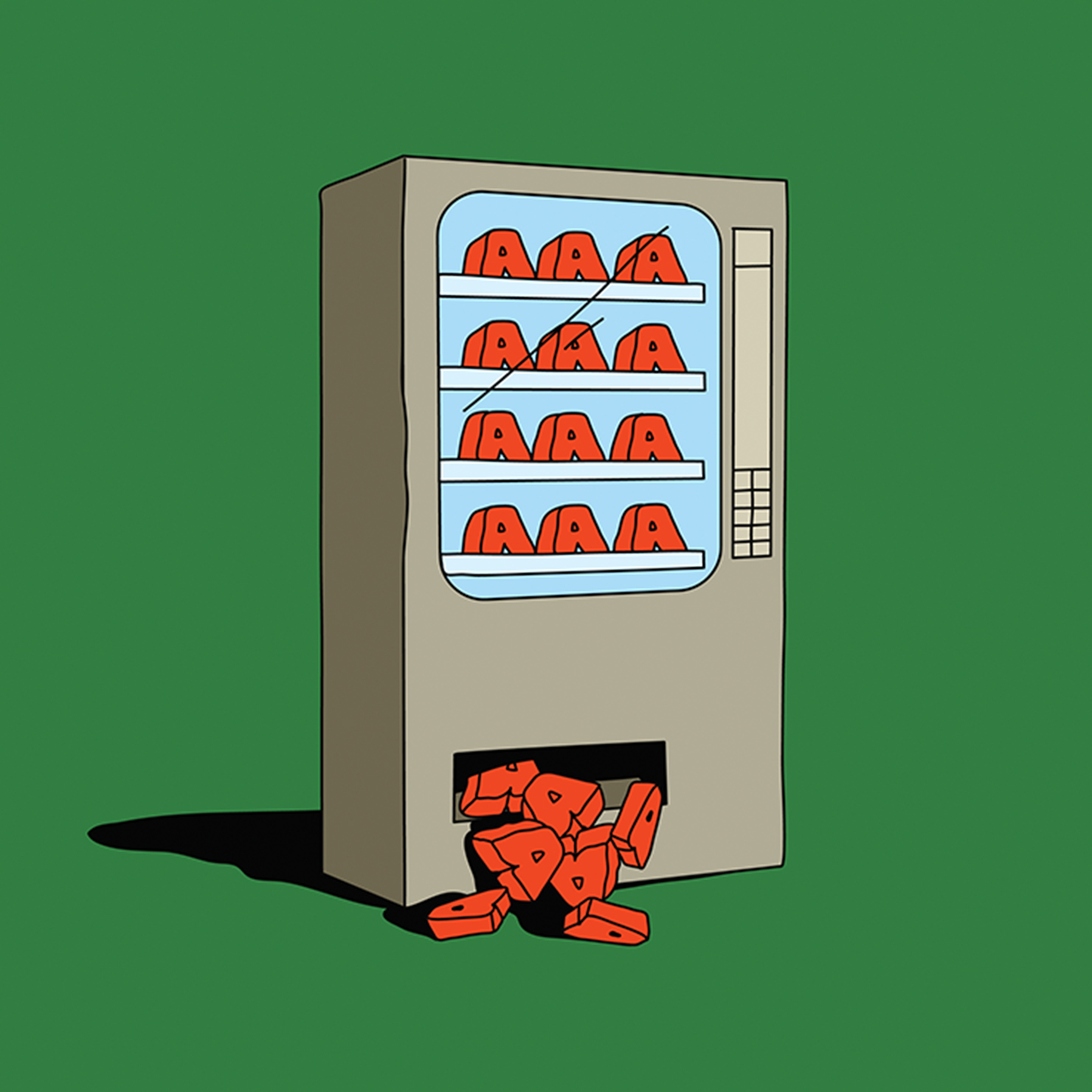
The story behind rising grades at Dartmouth is similar to that of elite universities across the country. As applications have skyrocketed and acceptance rates have plummeted, an ever-more select group of overachieving students, their eyes set on highly competitive jobs in finance and other fields or slots at top graduate schools, have fixated on maximizing their GPAs at all costs. B-range grades, far from representing “good mastery” of course material as described by the registrar’s office, have become blemishes on otherwise perfect transcripts. Rather than endure student resentment and tears, faculty members have by and large revised their expectations.
Professors have also raised grades to prevent declining enrollments in their courses. Some humanities departments have been particularly susceptible to this, as students have steadily drifted toward majors perceived as more marketable, such as economics and the hard sciences. “There’s a feeling that grade inflation is necessary for us to continue to attract students,” says Cecilia Gaposchkin, a history professor.
Complicating the whole picture is the advent of artificial intelligence. John Kulvicki, chair of the philosophy department, says most students use AI tools such as ChatGPT in his classes to varying degrees. Many rely on AI to break down difficult philosophical texts that they’re supposed to be reading and analyzing by themselves, while others go as far as submitting entire essays written by a chatbot.
“If it’s hard to know when and to what extent a student has used these tools illicitly or in a way that undermines their understanding, then grades seem to be particularly unhelpful,” Kulvicki says.
One of the things we should be doing is de-emphasizing grades as the metric of students’ intelligence, their success, their personhood, and start emphasizing learning.”—Mary Coffey
His courses are far from unique. Although some students may be using AI to supplement and reinforce rather than undermine their learning, many professors have described instances of students using such tools to circumvent assignments designed to help them develop certain crucial skills, often fully passing off work done by AI models as their own. Some would call this cheating on an epidemic scale.
Taken together, these factors add up to a gamified grading system in which most students expect and receive mainly A-range grades, regardless of whether their work merits the mark. Although typically referred to as grade inflation, the more specific problem, as some see it, is grade compression. Now that grades below the B-range are largely obsolete, professors are left with a tiny grading range to work with, diminishing opportunities for meaningful feedback. In classes where everyone gets an A, grades cease to communicate information about relative student achievement. Perhaps more importantly, in a world where students are more motivated than ever by grades, many will do very little work if very little is required to get an A.
“As faculty members, we’ve committed ourselves to the academic enterprise, and we spend most of our lives identifying excellence and seeking it in our own work,” says John Carey, a government professor and interim dean of the faculty of arts and sciences. “When the grading system has effectively lost that function because we’re not distinguishing anymore, it’s an existential issue.”
Not all professors agree. Among those who think the debate has been misguided is Mary Coffey, an art history professor. She considers the outcry around rising GPAs a distraction from larger questions about the College’s core academic mission. A policy such as Harvard’s cap on A’s or a blanket target median, she says, only further gamifies an already dubious system of evaluation while pitting students against one another, exacerbating existing inequities.
“One of the things we should be doing is de-emphasizing grades as the metric of students’ intelligence, their success, their personhood, and start emphasizing learning,” Coffey says. “The two can be aligned, but they cannot be aligned if you’re enforcing a hierarchy of grades in this arbitrary way. It’s a lazy solution to a complicated problem.”
Although some Dartmouth students favor the prospect of grading reform, many are broadly skeptical. Oscar Rempe-Hiam ’29, a prospective government and Spanish major, says he’s worried about the impacts tougher grading standards could have on students’ job and grad school prospects. If every top college were to adopt an identical policy to deflate grades, he says, he might be on board. He thinks the transition will be a lot messier. “When there’s that kind of wonky period where some schools have done it and some haven’t, I don’t know if employers are going to pay attention to that, especially with AI algorithms filtering job applications these days,” Rempe-Hiam says. “If you go to a school that has a grade deflation policy, who knows if they’re going to tell the AI model, ‘Help out these Dartmouth kids by giving them an extra point or two.’ ”
We were hitting a breaking point.”
—James Feyrer
Those wary of new grading practices also point out that previous attempts to tackle grade inflation at top universities have largely fallen flat. In 2004, for example, Princeton adopted a 35-percent cap on the number of A’s that could be given in undergraduate courses. Although the policy succeeded in lowering the mean student GPA by around 0.1 points, the university abandoned the cap in 2014 following a faculty report arguing that the policy added “a large element of stress to students’ lives” and was steering prospective applicants away from Princeton. Likewise, Wellesley obeyed a strict B+ median for most classes from 2004 to 2019 before abandoning the policy due to steady pushback from students and faculty.
Dartmouth, too, has a history of trying, unsuccessfully, to stop the upward creep of undergraduate grades. A decade before the current ad hoc committee formed, the College established an ad hoc committee on grading practices and grade inflation to investigate and combat the issue. Committee chair Mark McPeek, a biology professor, says that a major takeaway from the group’s research was that previous measures instituted by the College largely failed to stem the tide of rising GPAs.
Modern grade inflation surged during the 1960s and early 1970s, largely due to faculty members who intentionally inflated grades to protect students from flunking out and being exposed to the Vietnam-era draft.
In 1992, when the median GPA at Dartmouth had risen to around B+, the faculty voted to begin reporting class median grades on student transcripts, placing individual students’ marks in a broader context. The practice continues, but McPeek calls it “a complete failure.”
“The data shows that there wasn’t even a blip of a change in the rate of grade inflation,” he says. Publishing the median grades for each class also had an unintended side effect: the creation of Layuplist.com, now Layup.pro, a website that compiles course median data so Dartmouth students can seek out easy classes.
Individual departments have also tried to tackle the grade inflation issue. Since the early 2010s, the economics and government departments have followed “target median” policies, under which course grades are supposed to average out to B+ for larger classes and A- for lower-enrollment seminars. Even as the policies have prevented the two departments’ grades from drifting into the ether as they have elsewhere, econ and gov haven’t been immune to the general upward trend.
According to Feyrer, econ classes have still seen grades rise steadily, if slightly, through time, because professors rarely give grades below the B range.
Moreover, though econ’s target median was initially set at a B in larger classes and a B+ in seminars, the department shifted medians upward around the Covid-19 pandemic, partly to account for widespread inflation and partly to account for students dropping courses mid-term. “We felt we were potentially a little more out of step with other departments than we had been in the past because everybody around us was moving up,” Feyrer says.
Perhaps the elephant in the room for the current grading reform committee is the fact that the 2015 committee failed to effect meaningful change. The earlier committee proposed a number of measures, including that the College make its data on grading public, no longer allow students to opt out of receiving a letter grade in one course per term, and allow smaller class sizes so professors would feel less pressure to grade easily to increase enrollments. According to McPeek, Dartmouth adopted none of these policies.
All of this suggests that those keen on fixing grade inflation might face an uphill battle. Yet, there’s a pervasive feeling current efforts could succeed where past ones have failed.
For one thing, the College process this time around is different. The previous ad hoc committee’s recommendations didn’t include any policies for the faculty to approve, an action the current committee intends to pursue. That “will increase the likelihood our committee can make substantive changes,” Edmondson and Thayer say.
Perhaps more important, the fact that peer institutions such as Harvard and Yale are poised to take action against grade inflation could provide momentum in Hanover. Combine this with a growing public sense that grade inflation has gotten out of hand, and change might be easier to countenance for those within the walls of the academy.
“I think this is part of a larger crisis of confidence in higher education,” says interim dean Carey. “If that creates a little more impetus for taking and sustaining difficult action, then it might be okay.”
Habib Sabet wrote “Trouble in the Forest” (September/October). He lives in Massachusetts.