One day in early May 1932, a short, well-dressed man disembarked from a train in White River Junction, Vermont, adjusting his spectacles and sniffing the air of an unfamiliar New England spring. A Mexican artist named José Clemente Orozco, he had come to the area to demonstrate the craft of fresco painting on a small wall in the new library at Dartmouth College. All went well, but after that two-day visit, Orozco returned to New York on fire with a bigger, crazier idea—a vast allegory of civilization in the New World that would sprawl across 3,000 square feet of bare space in Baker Library’s basement reading room.
Nearly 100 years later, it’s safe to say the College still hasn’t recovered. The Epic of American Civilization—as the Orozco mural cycle is formally known—is one of the prides of Dartmouth, a masterpiece of the Mexican mural movement before which viewers from around the world stand in awe. At the same time, the mural has been a lightning rod for debate and splenetic fury. The Epic of American Civilization has been called “the greatest art asset of the College” and “a nauseating obscenity,” “the foundation of the favorable image of Dartmouth in the modern art world” and “an offense to every mind having the least sense of the fitness of things.”
What Orozco wrought on the walls of Baker is a surreal and very personal vision of a centuries-long struggle between mankind’s urge for freedom and the forces of greed, war, and industrialization. The Epic spans a timeline from the ancient Aztecs through the prophetic legend of Quetzalcoatl and the coming of Spanish conquistador Cortés to 20th-century resistance against the Machine Age and rising nationalism. It is shocking and beautiful and surprisingly prescient.
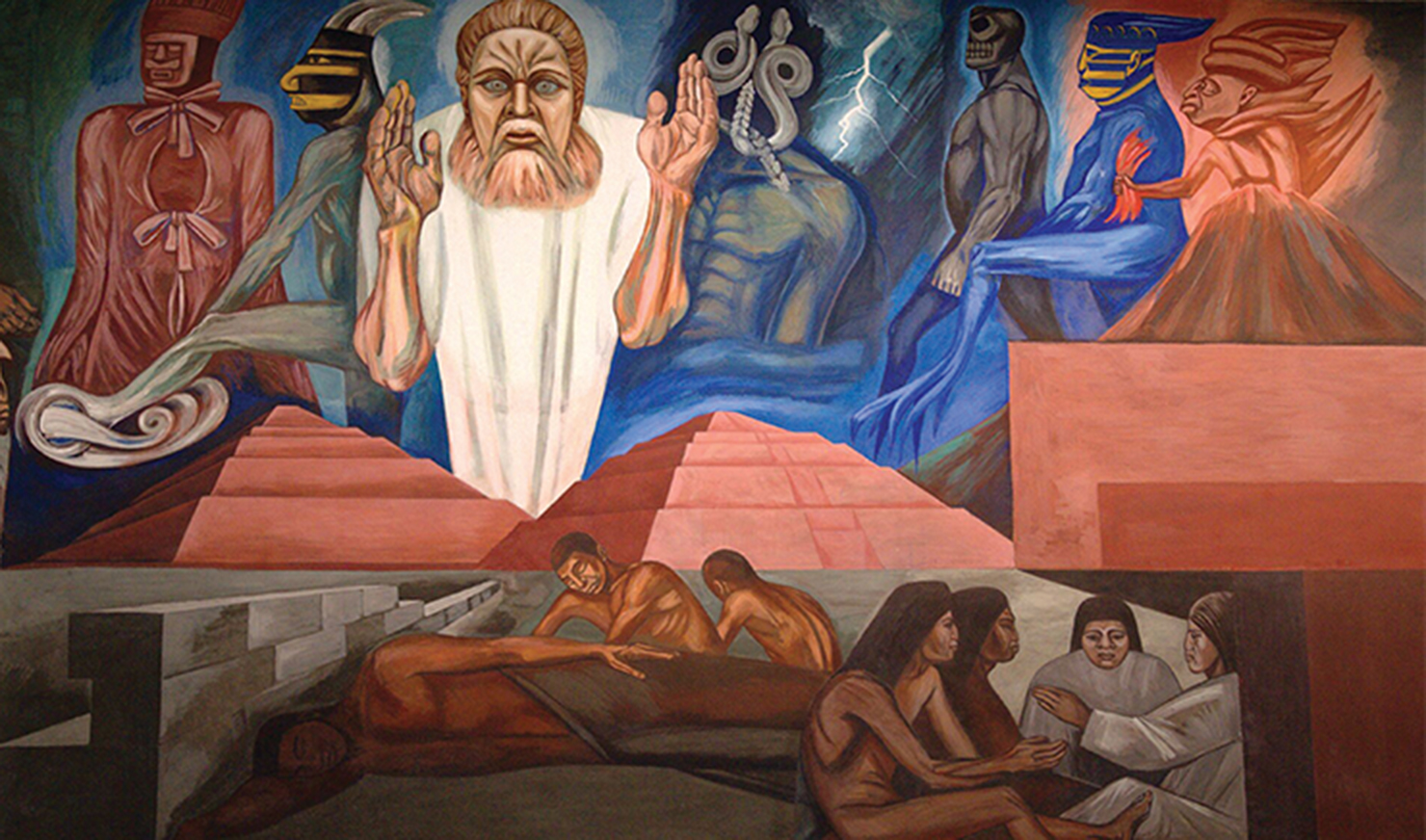
“What’s fantastic about the mural, and why I love it, is that we’re still catching up to it,” says Mary Coffey, professor of art history and Latin American, Latino, and Caribbean studies and author of the 2020 book Orozco’s American Epic: Myth, History and the Melancholy of Race. She often leads guided tours of the mural and says that “one of the reasons why seeing it with alumni, parents, groups that come to campus, and students is so exciting is because people bring their own insights to the mural.”
The Epic was named a national historic landmark in 2013, but what has been lost through the years is the story of how it was created and the dramas and personalities of the people who made it happen. It’s the tale of a mild-mannered visionary arriving in Hanover to commit art with the help of a few daring professors and a quietly heroic College president. To revisit the creation of The Epic of American Civilization is to explode its many myths, and uncover its forgotten truths including the following.
In every painting, as in any other work of art, there is always an idea, never a story. The idea is the point of departure.”
—José Clemente Orozco
Orozco wasn’t a revolutionary, an anarchist, or a communist. Even College President Ernest Martin Hopkins, class of 1901, assumed that any artist coming from revolutionary Mexico had to be a socialist rabble-rouser, dryly calling Orozco “a flaming red communist” in a 1932 letter to Dartmouth treasurer Halsey Edgerton, class of 1906, authorizing the upcoming expenditure.
In fact, the painter was by far the least doctrinaire of the three famous names in Mexican murals. Where David Siqueiros was a street-fighting member of the Mexican Communist Party and Diego Rivera was a romantic idealist of the country’s peasantry and working class, Orozco had seen enough death and atrocities during the bloody 10 years of the Mexican Revolution to have soured on any and all -isms. “No artist has, or ever has had, political convictions of any sort,” he wrote in his 1942 autobiography. “Those who profess to have them are not artists.”
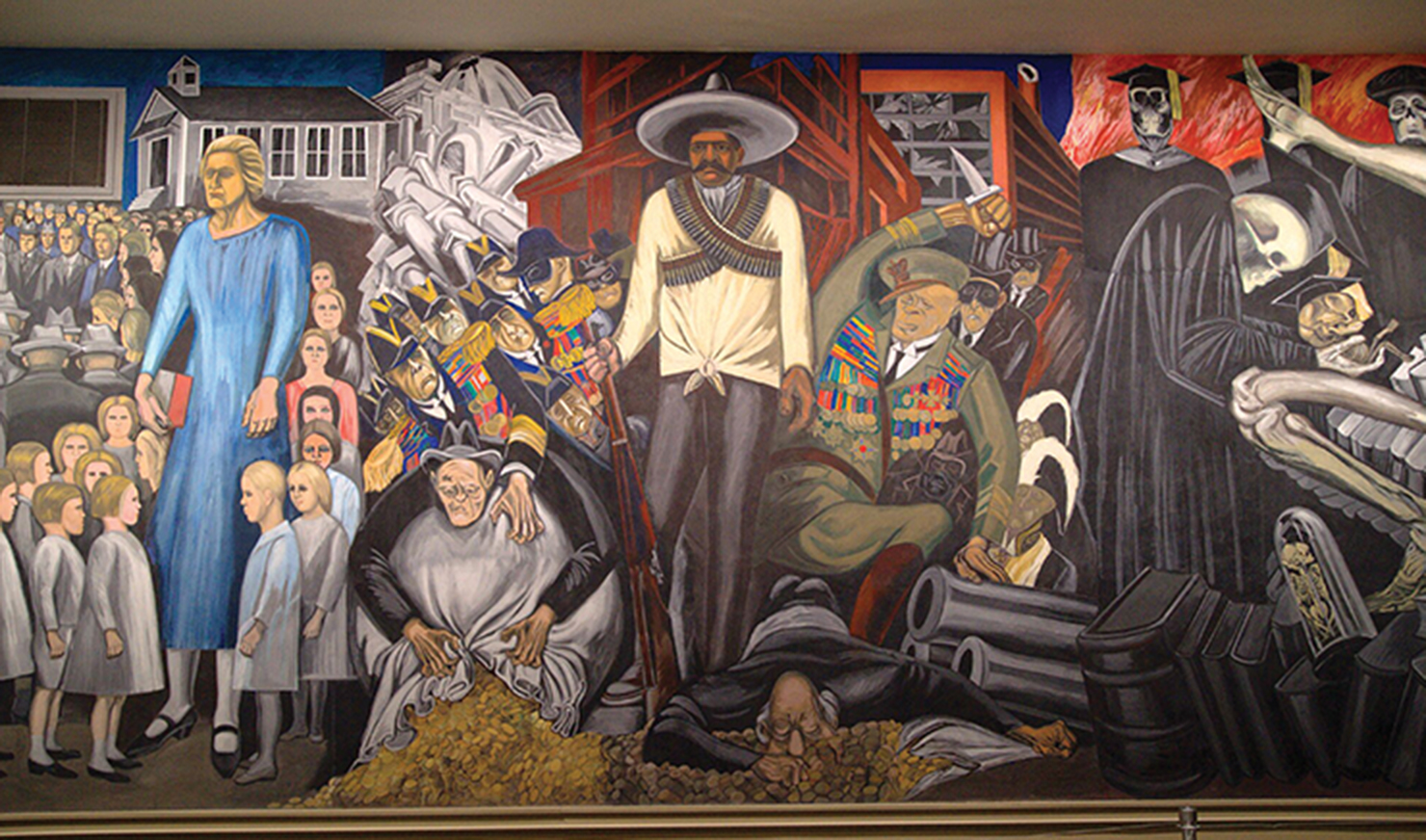
Anyone looking at The Epic panels such as the one called “Hispano-America,” with its money-grubbing imperialists and fat-cat generals, might disagree. Yet Orozco was intent on letting the art speak for itself, without any accompanying manifesto. In the introduction of a booklet published at the mural’s completion in 1934, the artist wrote, “In every painting, as in any other work of art, there is always an idea, never a story. The idea is the point of departure. … The stories and other literary associations exist only in the mind of the spectator, the painting acting as the stimulus.”
In other words: I’m just painting here. What you do with it is up to you.
The College tried to get the more famous Diego Rivera instead. If there is one person responsible for Orozco coming to Hanover, it would be Artemas Packard, then the chair of Dartmouth’s art department, with assistance from a young art professor named Churchill P. Lathrop. For that first weekend in 1932, the two had sold President Hopkins on the artist painting a small fresco on a wall in the newly built Carpenter Hall. Visitors can still find the piece in a passageway near The Epic mural. Dozens of students turned out to watch Orozco demonstrate his craft, but it was the 3,000 square feet of blank space in the Reserve Reading Room that left him thunderstruck. “These are the walls for my best mural, my epic of America,” he told Lathrop.
Packard had been working for several years to bring one of the Mexican muralists to Dartmouth as part of a never-realized vision of, as he described it in 1931, “a continuous series of mural paintings being executed at Dartmouth in intervals of 3 to 5 years during the next 50 or 100 years.” Such a project would require a tremendous endowment, which is why those words were written to Abigail Rockefeller, one of the driving forces behind Manhattan’s Museum of Modern Art and the mother of Nelson Rockefeller, class of 1930, who had already hired Rivera to paint a mural in New York City’s new Rockefeller Center.
So, while Packard was negotiating to bring Orozco to campus, he also was writing letters to Nelson Rockefeller about borrowing the services of the much higher-profile Rivera. But Rivera was asking $10,000 as payment, and Depression-era Dartmouth was cash strapped. Besides, Orozco indicated he was willing to paint his mural for free—or close enough. (In the end, his payments amounted to $7,700, with an additional $2,177.05 for materials.) That was just as well, since the rivalry between the two artists was intense, with Orozco scourging Rivera as a mediocre lightweight “who invented a revolutionary past that never existed.”
Orozco loved his time at Dartmouth— and Dartmouth loved him right back. The idea of a Mexican firebrand thumbing his nose at academia while eviscerating it on the walls is entertaining but has little to do with the truth. The two years it took Orozco to create The Epic of American Civilization—the bulk of it from October 1932 to February 1934—were some of the happiest of the artist’s life. Orozco moved his family to Hanover and enrolled his three children in local public schools. He judged a Winter Carnival ice-sculpting competition and saw movies at the Nugget. He spent election night 1932 at Lathrop’s house listening to the returns come in for Roosevelt on the radio.
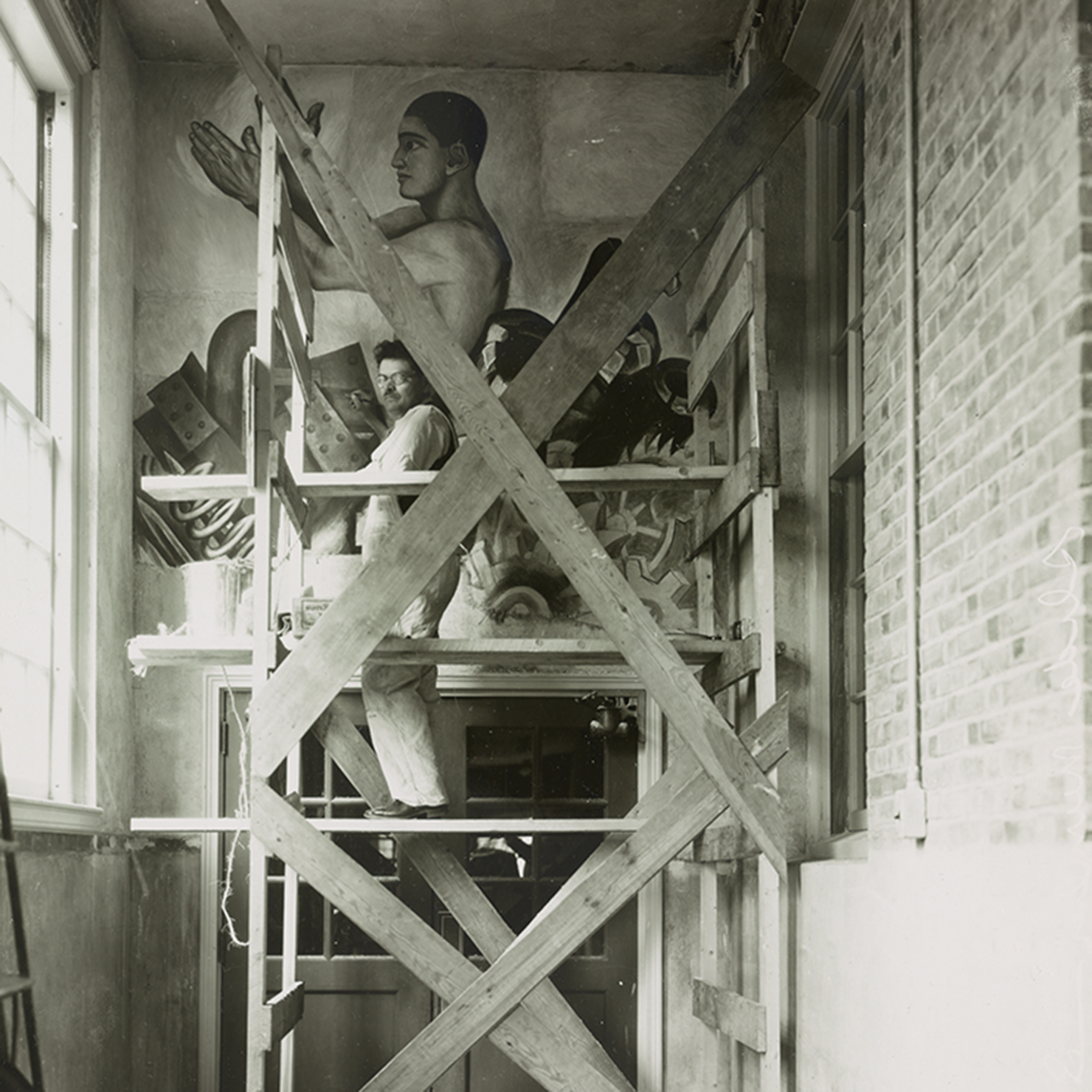
A student helper described Orozco as “a dark-complexioned man with a prominent nose and chin, thick glasses, and a perpetual scowl. This somber effect was heightened by a hook-shaped prosthesis that replaced the left hand he had lost in an accident years before.” As courtly in person as he was ferociously original in art, Orozco was popular with students on campus, and he beguiled assistants with his mastery of technique and dedication to the task. One aide, Leo Katz, later wrote: “We appeared at the same minute in the morning for breakfast; we arrived at a certain time in front of the scaffold, and then everything went like clockwork, as is necessary in fresco. We worked until the daylight gave out, ate some supper, and the rest of the evening was devoted to preparations for the next day.”
Katz was wry as well about the painter’s interactions with various professors: “It was amusing to see how the different members of the faculty tried to impress their own ideas or pet theories on Orozco for the walls of the library. He would listen politely, never argue, never contradict, just let them talk. … And then he would go ahead and paint exactly what he had in mind in the first place.”
When The Epic was completed—the artist signed and dated his work on February 13, 1934, mere days after Rivera’s Rockefeller Center mural, Man at the Crossroads, was demolished after the artist refused to remove an image of Russian Communist Party leader Vladimir Lenin—President Hopkins hosted a dinner in Orozco’s honor. Students and faculty gave speeches praising the artist’s “sweetness of character and loftiness of motive” while Orozco and his wife, Margarita, glowed with happiness. The family left Hanover for Mexico shortly thereafter. Orozco never returned, but the bonds between his family and the College remained close for generations—the painter’s son, Clemente, spoke at a 1980 Dartmouth symposium on the mural, and grandson José Clemente Orozco Farías was a member of the class of ’85.
Hopkins never backed down from defending the project as an example of artistic free speech and exactly the kind of challenging work a liberal arts education should offer its students.
Originally, The Epic was supposed to celebrate Abraham Lincoln, Ralph Waldo Emerson, and other “American idealists.” That didn’t happen. Detailed plans in the Orozco files at Rauner Library describe the artist’s initial vision as an epic of “the American continental races … becoming aware of their own personality, as it emerges from two cultural currents—the indigenous and the European.” One panel was reserved for the leading political and cultural lights of U.S. history as part of “the constructive civilizing force of human nature.”
What Orozco eventually delivered was far darker: a corrosive, satirical fantasia on the crushing forces of capital, war-mongering, and institutional sterility. What changed? It was most likely an awareness of the growing specter of global fascism in the period the artist was at Dartmouth. “I do think his vision darkens in those two years,” says Coffey. “He’s acutely aware of [rising] fascism and authoritarianism, and he sees it on both sides.”
Orozco’s three-month tour of Europe in the summer of 1932, during a break from creating the mural, may also have pushed him into a more trenchant pessimism. Traveling to see art, he witnessed the lingering aftereffects of World War I—wounded veterans begging in the streets with their faces blown off. “He’s quite shocked by that,” Coffey says. “I think he starts to say, ‘I’m not going to provide a homily to civilization and its bounties in a world where people are starving to death and abandoned by their own societies. I can’t paint that mural.’ ”
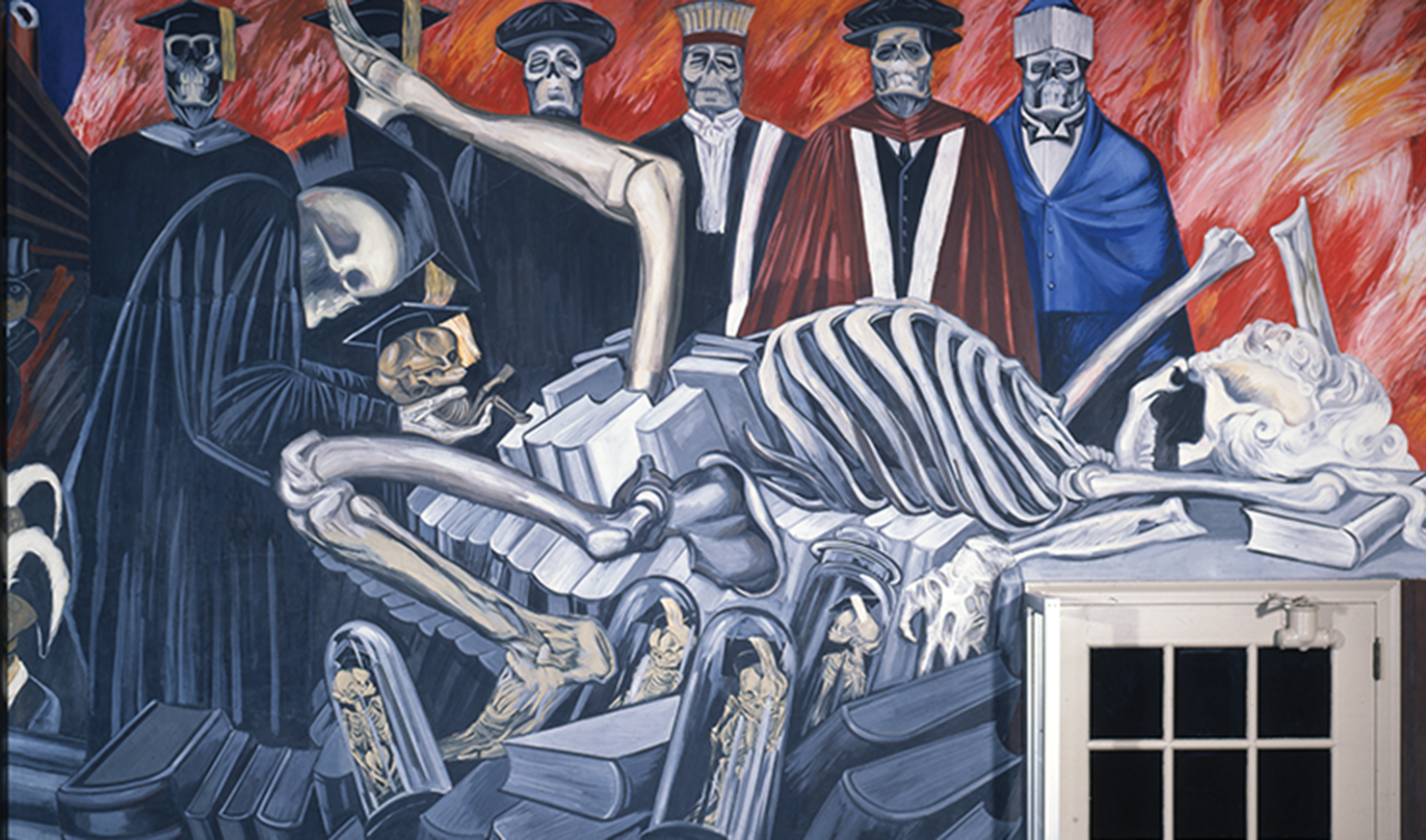
The notorious panel called “Gods of the Modern World” was not an attack on Dartmouth—mostly. The scene, which initially spurred the most furious resistance, depicts skull-headed academics in caps and gowns delivering a tiny fetal professor from a writhing female skeleton. Wrote one incensed alumnus to President Hopkins, “Every lineament of the faces and posture of the figures depict hatred, beastiality [sic], and ignorance.”
“Orozco is a contrarian,” allows Coffey. “He does a little bit bite the hand that feeds.” However, rather than indicting Dartmouth specifically, she says, the mural captures a larger criticism of American education that was affected by Orozco’s time in Hanover. “He’s at Dartmouth at a time when it’s exclusively men—when the school student body is overwhelmingly white, Protestant, elite, wealthy New Englanders,” she says. “He’s highly invested in the idea of education as a mechanism for personal uplift, civilizational achievement, enlightenment.” As a privileged passage to upper-class American adulthood, not so much.
Today’s students grasp this immediately, says Coffey, in part because the iconography, such as a portrait of a New England schoolhouse as a breeding ground for Children of the Corn-style zombies, is familiar from horror movies and other pop-culture tropes. It’s just another way Orozco was ahead of his time.
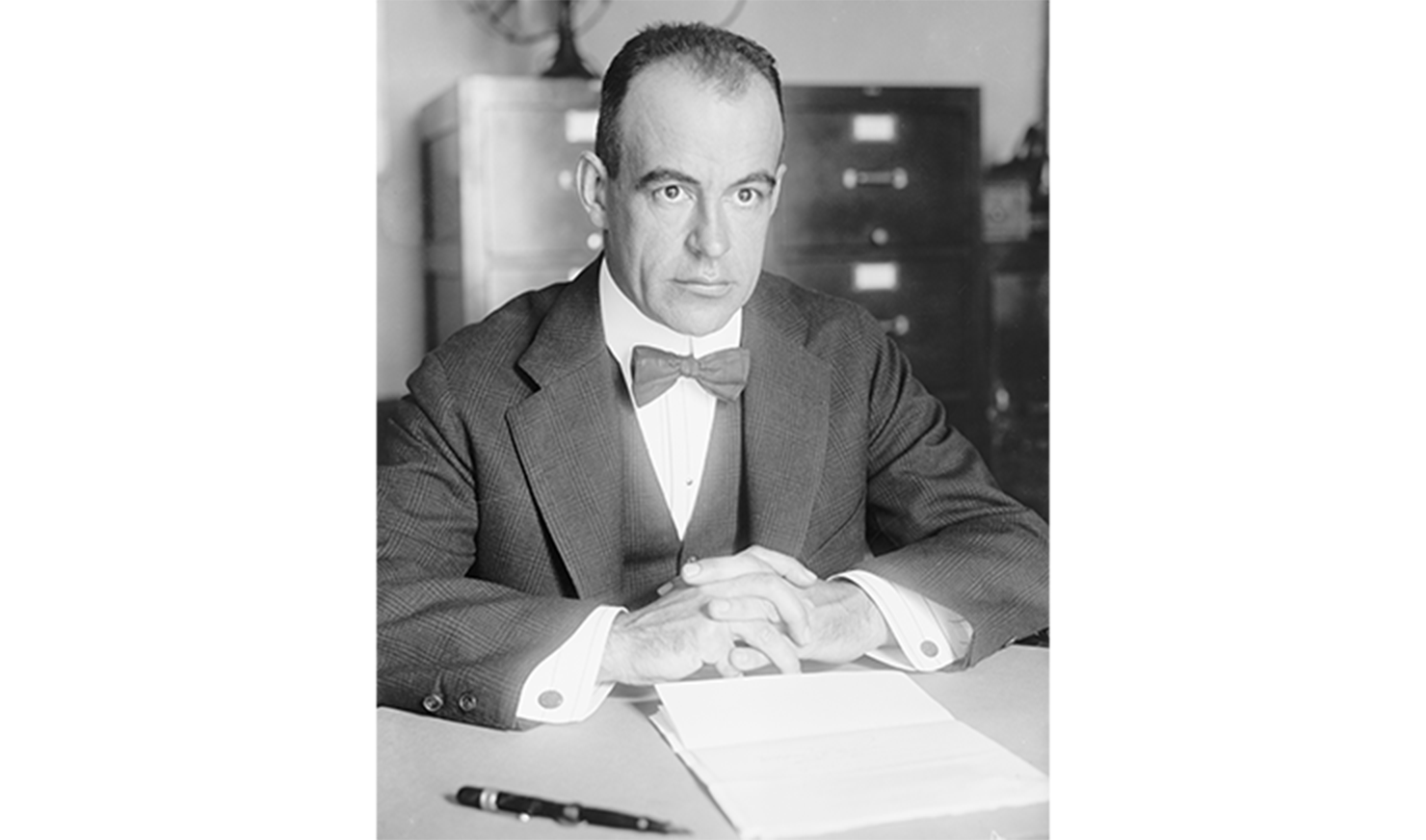
The unsung hero of the whole project? President Hopkins. The battle about The Epic of American Civilization was on before the mural was even completed, with a newly formed organization calling itself the National Commission to Advance American Art criticizing the College for hiring a foreigner to create such an “important national work.” When the completed mural was unveiled in the spring of 1934, the debate spilled into the national media, including fiery editorials pro and con. An alarmed and vocal alumni contingent condemned the artist for being a modernist, a Mexican, and some kind of “Red,” with many calling for the mural’s destruction. But Hopkins never backed down from defending the project as an example of artistic free speech and exactly the kind of challenging work a liberal arts education should offer its students.
Hopkins even claimed in a late-life interview that he refused Orozco’s offer to tone down “Gods of the Modern World,” the panel about education. “[I told him] nothing doing, you’ve taken everybody else in the world over the hurdles—we aren’t going to ask any immunity at all on the thing. And he was very greatly relieved.”
Privately, Hopkins objected only to the panel’s depiction of the schoolchildren, writing to Packard that “there never was a group of children in New England, either in Puritan times or since, that looked anything like this group of Scandinavian squareheads. … With this, I am done as an art critic.”
“I think Hopkins is pretty great when it comes to Orozco,” says Coffey. “I can’t imagine a Dartmouth president today standing up for freedom of expression in that way, especially to alumni who have money.”
Hopkins did commission Walter Beach Humphrey, class of 1914, to paint some murals more in keeping with Dartmouth traditions and install them in the Hovey Grill. Depicting a drunken Eleazar Wheelock cavorting with half-clad Native American maids, these murals caused problems of their own, to put it mildly. Recalled Hopkins, “I facetiously said sometimes that I’d lost half the alumni on the Orozco murals and the other half on the Hovey ones.”
The Hovey Grill murals were taken down from the dining hall basement in 2018 and put in storage. The Epic of American Civilization remains, nearly a century after its creation, a bravura work of graphic art and a daringly provocative masterpiece of social commentary. If anything, what Orozco painted on the walls of Baker Library speaks louder in 2026 than ever. “It’s a lot easier in this moment for students to imagine themselves into the 1930s, when fascism and authoritarianism were on the rise and civil liberties were not guaranteed,” says Coffey. It’s why, in her opinion, students seem increasingly drawn to The Epic: To them it makes sense. What they tell her is that they “feel like he’s talking about right now.”
Ty Burr, a DAM contributing editor, most recently wrote “From Hanover to Hollywood” (July/August).