In 2018, Roxanne Khamsi, then chief news editor of the journal Nature Medicine, read a New England Journal of Medicine article that described how genetic mutations could cause cardiovascular disease. “I was completely floored that it was possible for us to have DNA changes that weren’t causing cancer but instead causing other diseases that are very common,” she says. The idea overturned something fundamental Khamsi thought she understood about DNA and genetic mutations. “It was a lightning moment.” She had to learn more.
After years of study, Khamsi has collected her research in a new book, Beyond Inheritance: Our Ever-Mutating Cells and a New Understanding of Health, published by Riverhead Books in April. “The most important thing people get from my book is that their DNA is changing every moment they are breathing on planet Earth.”
The groundbreaking book makes two central points. First, mutations to the genetic material in our cells happen at a massive scale throughout our lives. “By some estimates, you acquire trillions of new mutations a day,” Khamsi says. She cites a 2015 study that analyzed the removed tissue of patients who had had eyelid lifts. Though none of the patients had a history of cancer, a quarter of the cells examined had abnormalities in a gene linked to cancer, likely the result of UV damage.
Second, while some mutations can be harmful, they can also be beneficial. “Mutation is necessary for many helpful things that happen in the body, not least of which is for the immune system to function. Without mutation, we can’t make new antibody types to fight pathogens we’ve never seen before,” she says. “So immune cells produce new shapes of antibodies that can neutralize and kill bacteria and viruses through the process of mutating their DNA to make those new antibody proteins.”
Beyond Inheritance has been widely praised by medical experts. “Most of us were taught genetics as the study of inheritance. You get a hand of cards at conception, and you play it. Khamsi takes that apart,” says Céline Gounder, a physician, epidemiologist, and medical journalist at CBS News. “The genome in your skin cells tonight isn’t the one that was there this morning. Oncologists have understood a version of this for years, because it’s why targeted drugs stop working. Tumor cells evolve under the selective pressure of the drug. Khamsi pushes that logic into tissues nobody thought could evolve: blood, liver, brain. Single-cell sequencing became cheap enough to see what had been true all along. Specialists have known this for a while, but clinical medicine hasn’t caught up to what it means.” New Yorker staff writer and physician Jerome Groopman wrote that “Khamsi’s emphasis on the beneficial aspects of somatic mutations is one of the most striking elements of her book.”
Mutation: The word just means change, and it doesn’t have an intrinsic negative connotation.”
—Roxanne Khamsi ’02
The link between genetic mutation and heart disease that so jarred Khamsi was made by the pathologist Siddhartha Jaiswal and his colleagues. While researching leukemia at the Broad Institute in Cambridge, Massachusetts, Khamsi writes, Jaiswal gained access to a large trove of DNA data. On a hunch, he looked to see if there was any connection between an abundance of mutated blood cells and heart disease. There was. “People with mutant populations of blood cells had a doubled risk of coronary heart disease and a more than doubled risk of stroke,” writes Khamsi. The researchers called the condition clonal hematopoiesis of indeterminate potential, or CHIP. The increased risk appears to be a result of inflammation caused by the mutant blood cells, a contributing factor to heart disease—though, Khamsi notes, it is very common to have CHIP and be free of any negative effects.
Although the word “mutation” can induce dread, Khamsi argues for a rehabilitation. Botanist Hugo de Vries first used the term in 1901 in relation to a biological alteration—with no prejudice attached. “The word just means change, and it doesn’t have an intrinsic negative connotation,” Khamsi says. In researching her book, she found cases of people whose bodies autocorrected and fought diseases such as muscular dystrophy through mutation. “These individuals experienced healing mutations that then reversed or cured their disease,” she says. “They’re like secondary mutations that healed the first primary mutation.”
In the book, Khamsi describes how doctors at the Moffitt Cancer Center in Tampa, Florida, used a Darwinian approach to cancer mutations to treat patients with advanced prostate cancer, pitting different strains of cancer against each other to extend patients’ lives. Oncologist and radiologist Robert Gatenby used low doses of chemotherapy rather than the typical approach for late-stage cancer of opening both barrels on the disease. Patients would receive just enough chemo to keep the cancer from growing rather than trying to eliminate it completely. One patient asked how they would know the treatment was working. His doctor replied, “Well, you won’t be dead.”
Gatenby had realized the cancer cells that survived intense chemo were the hardiest, so they were the most dangerous to the patient. The lower doses of chemotherapy kept the volume of drug-resistant cancer cells down. By slow-walking the treatment, it put the more dangerous cells in competition for resources with the less-lethal cells, which in effect checked the growth of the cancers. When PSA levels in the patients surged, indicating tumor growth, the doctors hit it full-bore with the drugs, then reverted to the moderate regimen. Patients in the trial survived longer on average than those who received the standard therapy. “The idea was far out and counterintuitive,” writes Khamsi. It also appears to have been effective. One doctor told Khamsi that Gatenby was turning cancer into a chronic disease.
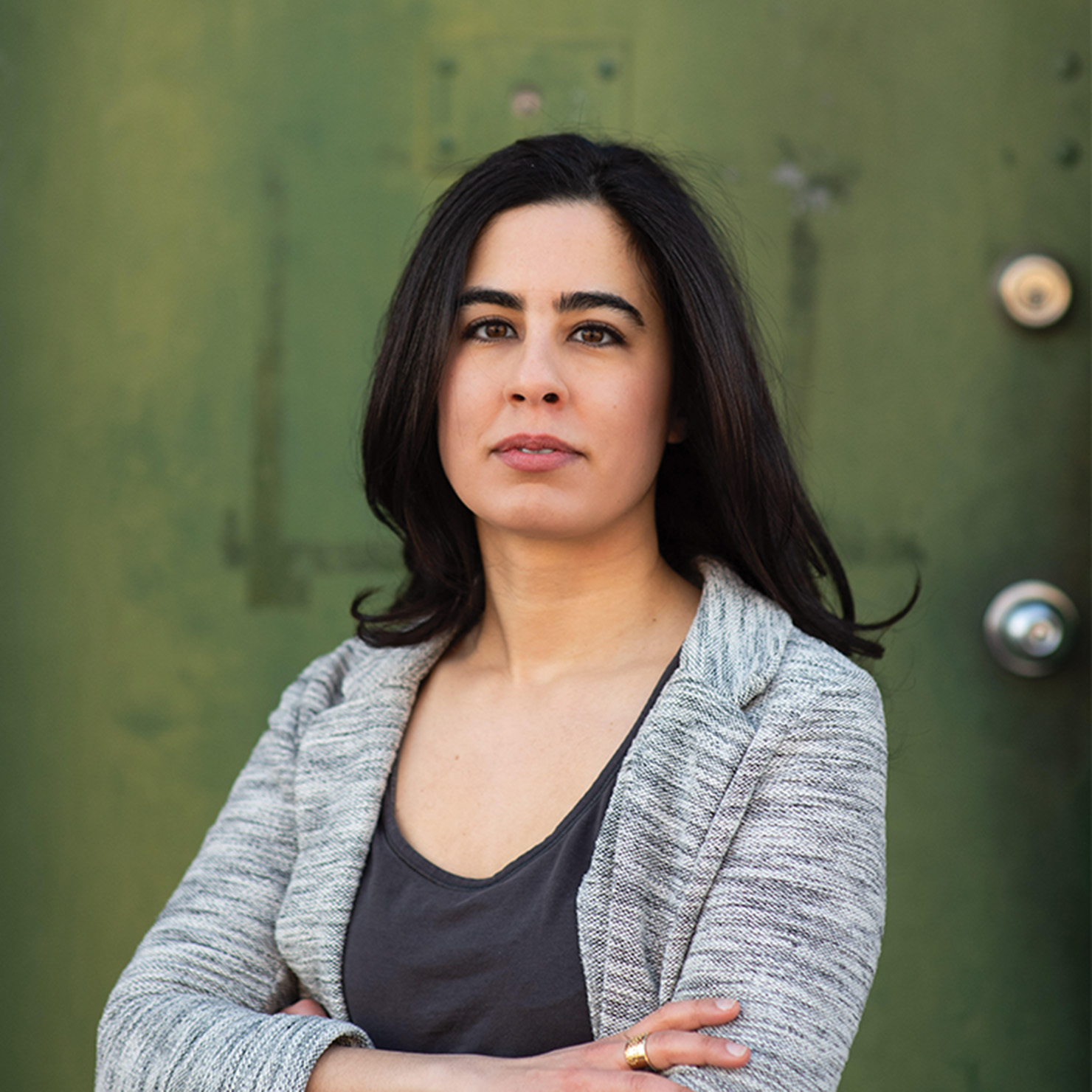
Khamsi is of Iranian heritage and lives in Montreal with her young son. Besides Canada and the United States, Khamsi has lived and worked in the United Kingdom and Latvia. She credits her cosmopolitan background for sensitizing her to the notion of the protean capacity of human beings socially, which parallels the idea at the heart of her book of the variability of our genetic makeup. “My hope is that this book will open your eyes to the landscape of immense and ongoing genetic diversity that exists within each human body,” she writes. “You will recognize that you are a slightly different genetic version of yourself today from yesterday and will be different yet again tomorrow.”
Khamsi began her undergraduate studies at the University of Virginia before transferring to Hanover. “At UVA, I would put on a full face of makeup and wear nice shoes to go to 8 a.m. classes.” When she came to Dartmouth to visit friends, she enjoyed the more relaxed vibe. It was one of the reasons she transferred. “We are different people in different environments. I like to be low key, and I could be outdoorsy at Dartmouth and that was part of my identity I wanted to lean into. It’s a constant thread throughout my career—understanding the flexibility in our biology.”
By the time she transferred to Dartmouth, Khamsi had already resolved to be a science journalist, thanks to a serendipitous event. She loved science and was on an engineering track at UVA but also had an interest in journalism. While checking out a book at the library one evening, she saw a volume on the return cart, Alternative Careers in Science: Leaving the Ivory Tower. One chapter was written by a medical reporter at The Dallas Morning News. “She was talking about how cool it was to be a science journalist,” Khamsi recalls. “I walked out of the library. It was 7 p.m. on a clear night, and I thought, I know what I’m going to do with my life.” She published her first science article later that year.
At Dartmouth, Khamsi studied biology with a concentration in genetics and took courses on the history of genetics. “It got me thinking about science in a broader way, and I think that is why I have this inclination to dig into the origins of ideas and where they come from.” She joined the newly formed Dartmouth Undergraduate Journal of Science and took a journalism class with Noel “Ned” Perrin, one of the early members of the College’s environmental studies program. “He did everything on a typewriter. There were five people in the class, and if you got an article published you got a half-grade bump on your final grade. We mailed pitch letters.”
Khamsi reached out to Dan Fagin ’85, a professor of science journalism at New York University and winner of the Pulitzer Prize, soon after graduation. “She got my name from the College career services office, and we chatted about careers in science journalism,” Fagin says. “We’ve been friends ever since. Roxanne has been a wonderful mentor to several of my graduate students through the years, which closes the loop very nicely.”
About a year after Dartmouth, Khamsi landed her first full-time journalism job as deputy editor of The Baltic Times in Riga, Latvia. The following year, she moved to London, where she worked as a biomedical reporter for Nature. In 2007, Khamsi moved to New York City to take the chief editor desk at Nature Medicine, where she worked until 2019.
Since then, Khamsi has written for numerous publications, including The New York Times and Wired. In March 2020, she was one of the first journalists to write about the airborne nature of the coronavirus, and she covered the pandemic extensively. “I was scared when I published that piece about Covid-19 being airborne, because if I got that wrong, that would be egg on my face. But I was confident enough in my reporting that I could do it carefully.” She is currently a contributing writer for The Atlantic. “Roxanne is a truly outstanding science writer who is absolutely fearless about tackling complex, cutting-edge biology,” says Fagin. “Her explanatory skills are top notch. I love bringing in Rox to speak with my grad students because she is a fount of excellent practical advice as well as an inspiring role model for success in our very challenging but vital profession.”
Khamsi believes society needs a radical shift in how to think about DNA and the nature of genetic disease. “Part of the reason I wrote this book is that we are constantly asking ourselves, why did I get this disease or why did this disease strike this person in my family, whether it be cancer or other diseases,” she says. With a fuller knowledge of how our genetic code changes throughout our lives, Khamsi argues for keeping an open mind about the therapeutic possibilities our increasingly refined understanding of mutations can present. “This book is a stepping stone to opening those conversations.”
Chris Quirk is a frequent DAM contributor who lives in New York and Vermont.