


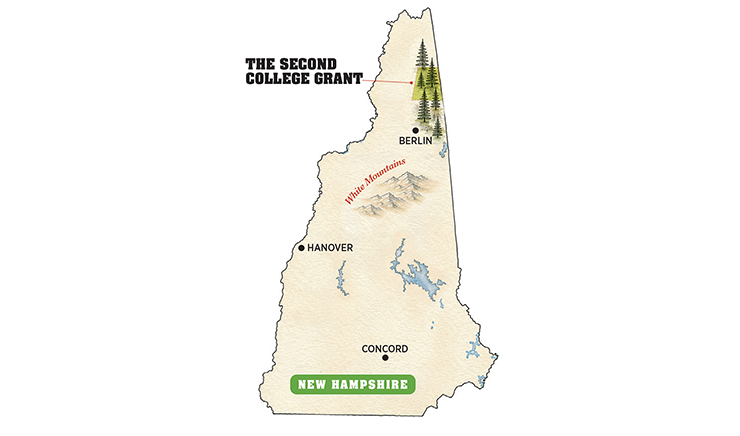
On the night of July 10, 2024, as the remnants of Hurricane Beryl swept across New England, nearly 3 inches of rain fell on the Second College Grant. During the course of the next week, Kevin Evans watched rolling storms drop another 7 inches on Dartmouth’s 27,000 acres of wilderness, turning the Grant’s dirt roads into a muddy soup.
“When it started to rain, it just kept raining for five, six, seven days straight,” recalls Evans, Dartmouth’s director of woodland operations. “That pushed us over the edge.”
The deluge washed out roads, submerged cars, trapped residents, and did millions of dollars in property damage across northern New England. It also did another kind of damage in the forest Evans manages: It wiped out the College’s extensive timber harvesting operation in the Grant for months.
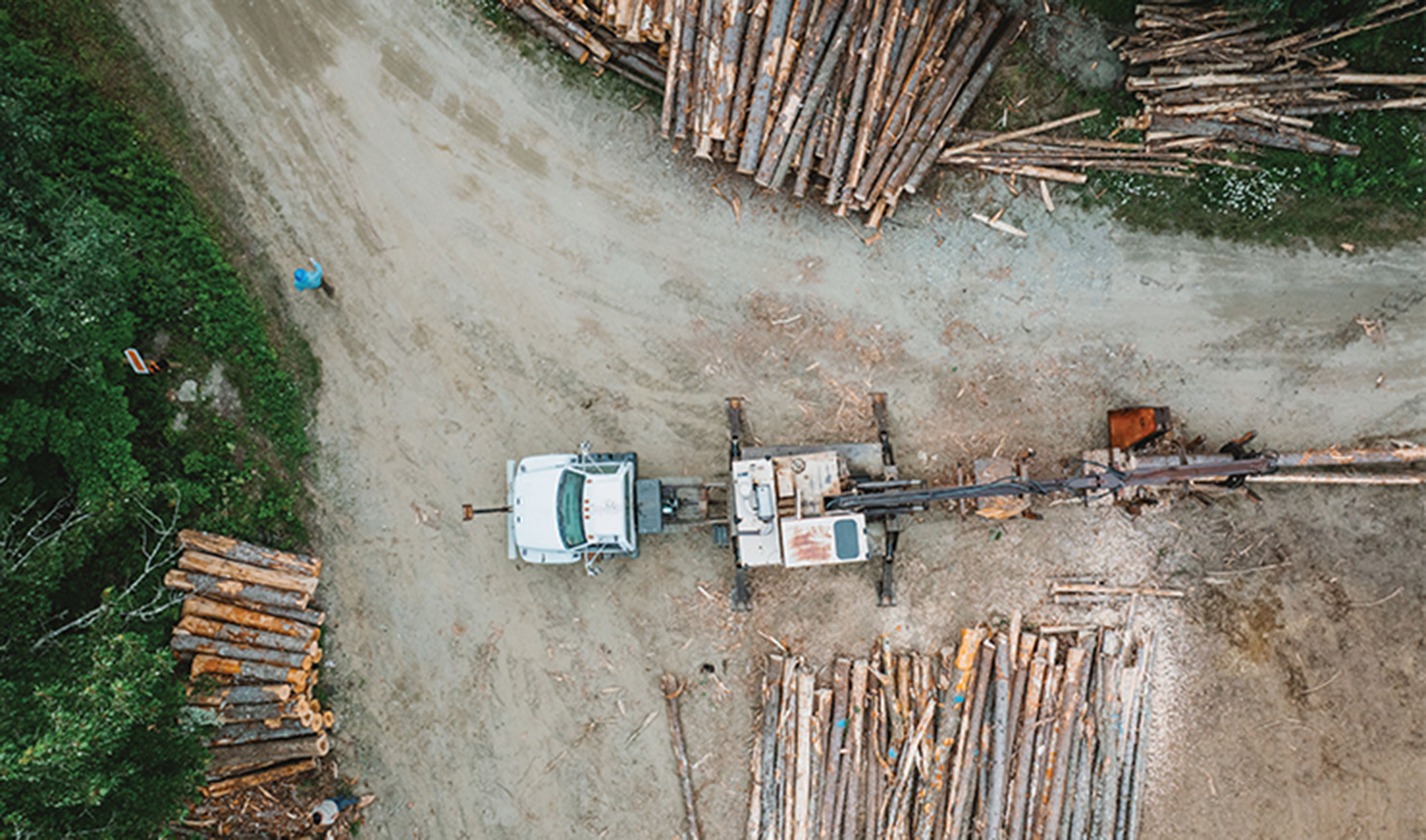
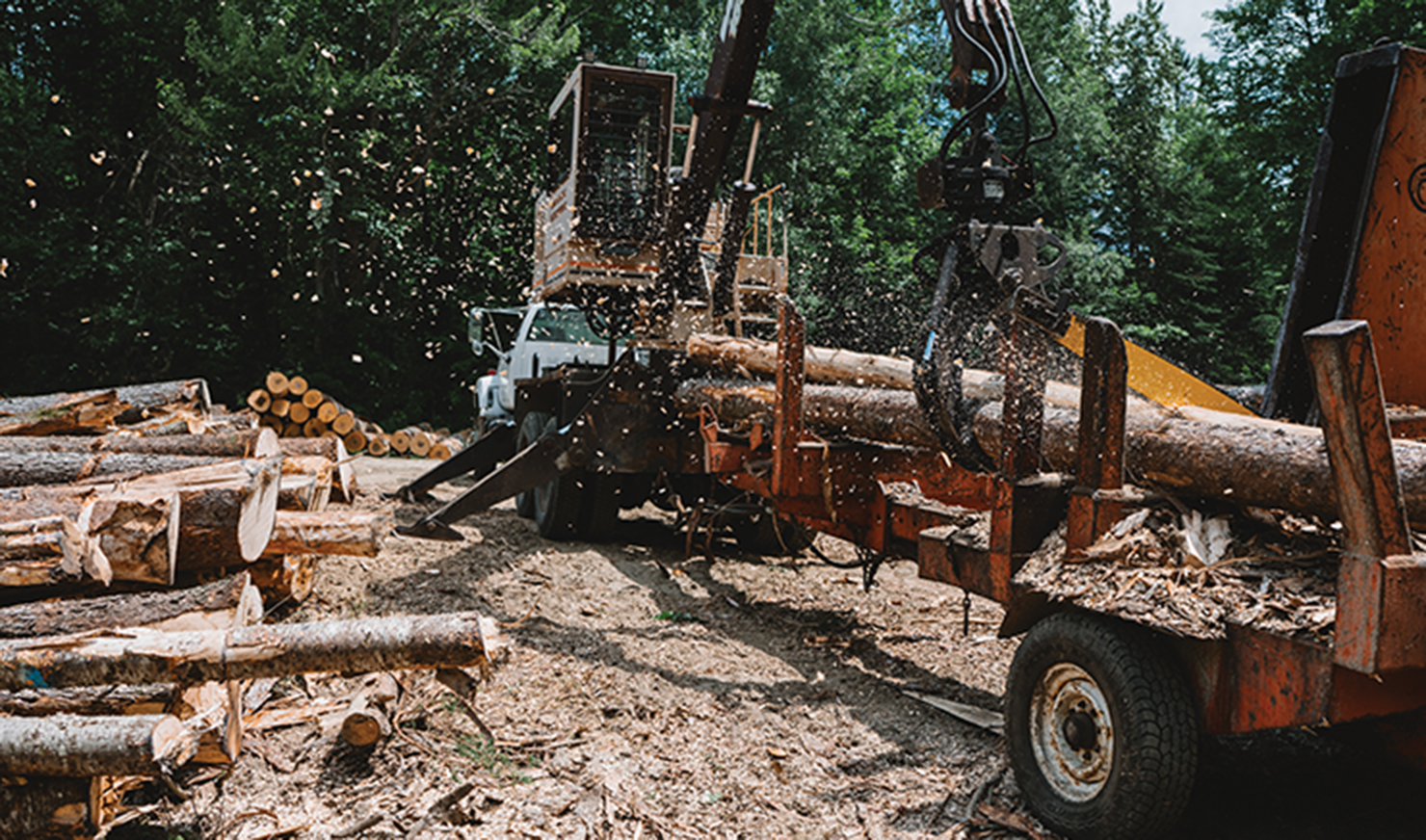
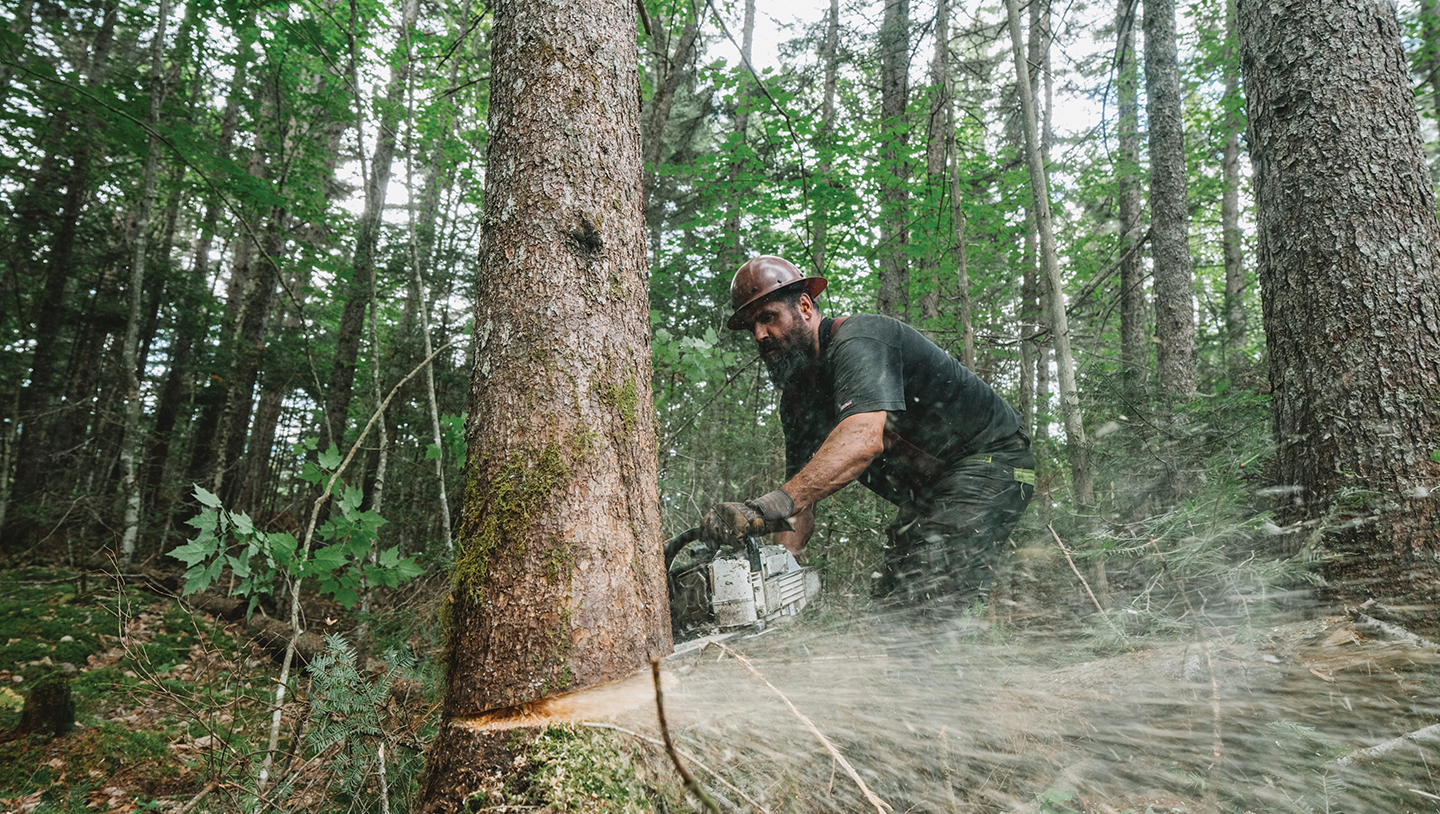
Vehicles such as skidders and forwarders, which are used to haul logs out of the woods, weigh several tons and move on treads or massive tires lashed with bulky chains. If the ground gets too soggy from heavy rains or snowmelt, it becomes impossible to maneuver this machinery around without getting stuck. “A skidder will just disappear. It’s a 5-ton machine,” Evans says. “It’s just going to make a big mud hole.”
We've lost anywhere from four to eight weeks of frozen ground conditions during the last several decades.”
—Tony D’Amato
Rain continued to pound the forest intermittently through that summer and fall, and it wasn’t until December that the loggers could get back to work. “We just shut things down,” Evans says.
The New England timber industry is facing a host of challenges, including rising costs, a tight labor market, and depressed prices for pulp and lumber. Add in the mercurial weather patterns of a rapidly changing climate and the result is an operation in the Grant that isn’t what it used to be. A decade ago, the annual timber harvest averaged about 8,000 cords of wood per year, but that annual total has dropped to as little as 4,500 to 5,000 cords in recent years, according to Evans.
Much of that has to do with mud, which used to be easier to work around. The timber harvest in the Grant has traditionally lasted for most of the year, with short breaks built in to accommodate the annual northern New England mud season in the spring as well as another typically muddy period in the late fall. Evans says that up until the late 2010s, loggers were working in the Grant for 44 weeks a year on average.
But in the past decade, the region’s changing climate has begun to fracture that once reliable timeline. On one hand, rising temperatures are shortening winters on both ends and lengthening the spring mud season. A 2024 study conducted at the Hubbard Brook Experimental Forest in New Hampshire found that snow in the region has been disappearing more quickly during the past 56 winters—with snowpack duration decreasing by up to 9.6 days per decade in some areas.
On the other hand, extreme rainstorms are becoming increasingly commonplace in the warmer months, rendering the ground in the Grant inoperably muddy for large swaths of the summer and fall. In 2024, between a shortened winter and the extended summer storms, Evans estimates they were cutting wood for 25 weeks at most.
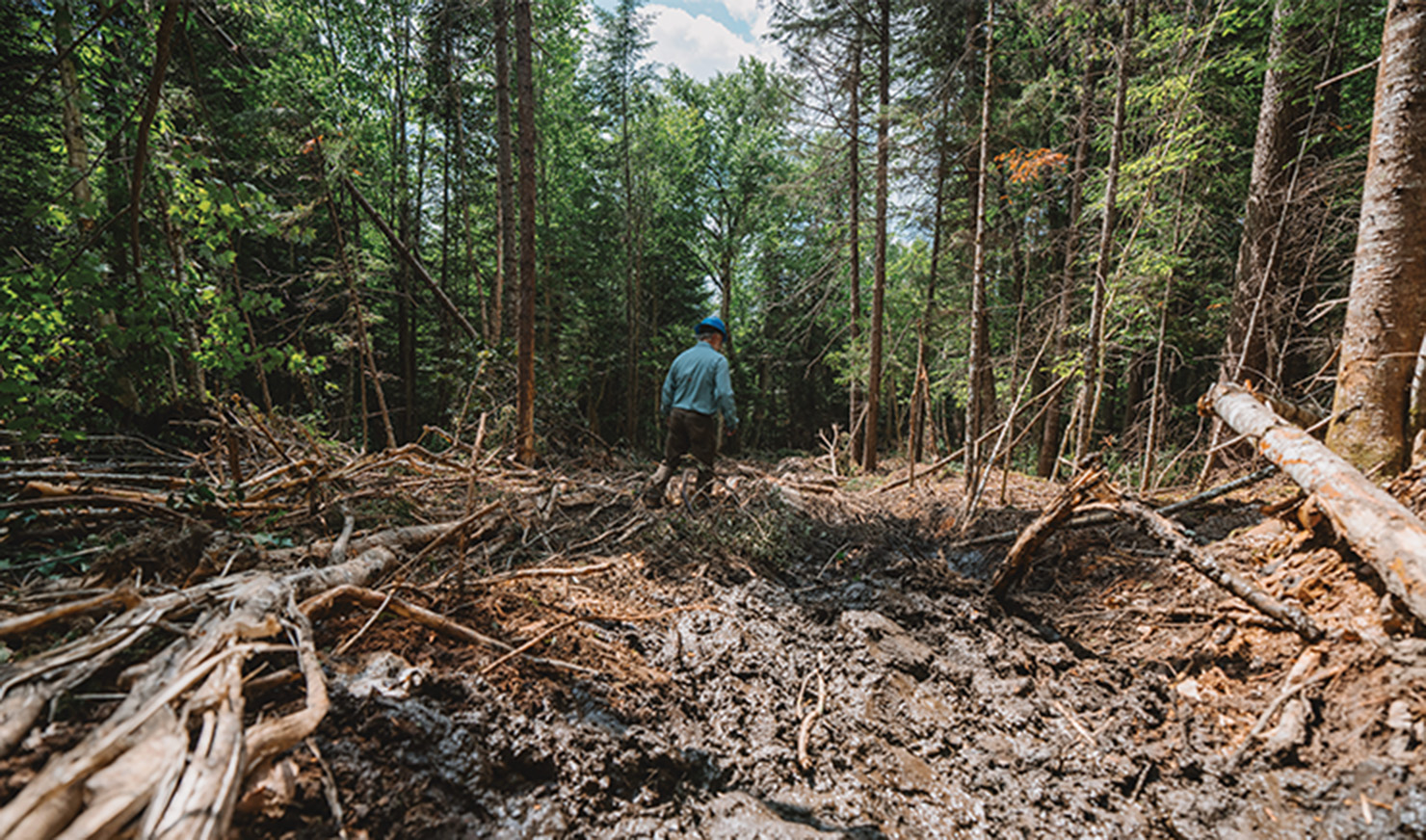
The season was similarly truncated in 2023, when Coös County, home to the Grant, received more than 15 inches of rain between July and August, keeping the loggers out of the forest until late September and resulting in another year of fewer than 30 weeks of cutting. Then, in 2025, a mid-May storm wiped out 4 miles of roads in the Grant, foreshadowing another shortened season. When the rain gave way to a months-long drought, Evans had to scramble to get loggers out there to make up for lost time. By then, though, one of his contractors had found other work and didn’t return when conditions improved in the fall. In all, 2025 allowed for about 26 weeks of timber harvesting, half of which was done with one less logger.
For Evans, the steep decline in the timber harvest translates to less revenue to manage the forest that so many at Dartmouth cherish. Historically, selective logging in the Grant has paid the bills for everything from roads to the maintenance of cabins, with most of the excess profits going to the College’s scholarship fund—but that equation has gotten more complicated.
“Let’s just say that climate change has changed the way we do things,” Evans says. “We’re learning what this new regime in a world of changing climate is going to look like for us.”
Most Dartmouth undergraduates and alumni know the Second College Grant primarily as a place for recreation and research. On first-year trips, incoming students have fished in the burbling trout pools of the Swift Diamond River and watched the fog drift across the trees from the top of Diamond Peak. As alumni, they have reunited in rustic cabins lit by oil lamps, places reachable in the winter only on snowshoes or Nordic skis. But the Second Grant is also a working timberland, originally given to the College in 1807 by the New Hampshire legislature to provide a source of income for the growing school.
At first, the Grant was seen almost exclusively as an economic resource for the College, a commodity to be plundered when convenient and otherwise ignored. For more than a century, beginning in the mid-1800s, the land was periodically stripped of all the valuable softwood such as spruce and fir that could be floated down the Swift Diamond and Dead Diamond rivers—and then turned into paper products. By 1947, when Dartmouth hired Robert Monahan, class of 1929, as its first full-time forester, loggers were going after heavier hardwood such as red maple and yellow birch. In the late 1940s, Monahan wrote in Dartmouth Alumni Magazine that the Grant was “studded with stumps” from years of intense logging.
Dartmouth suspended timber harvesting operations in 1967 and established a committee to manage the forest sustainably while enhancing recreation and research opportunities. Working with two private timber management companies from Maine, the College came up with a plan that would allow the forest to grow back while allowing for logging. Unfortunately, the partnership was almost immediately derailed by a disease outbreak that killed spruce and fir trees. It would be nearly two more decades before the College resumed logging in earnest.
Finally, in 1987, Dartmouth began implementing the progressive silvicultural practices that have since made the Grant an exemplar of sustainable forestry. Roughly 10 percent of its 27,000 acres have been set aside as natural areas not to be logged. On the remaining land, 2- to 3-acre stands are harvested on a 20-plus-year rotation so that the forest can regenerate. Rather than clear-cutting the stands, trees are selectively cut to encourage diversity in age, size, and species. In general, the College makes sure to cut less wood than it grows.
“You’re always balancing and figuring it out,” says Evans, who took over as forester in 1993. “The forest is changing all the time, and we need to be on top of what that sustainable yield is.”
Climate change has changed the way we do things.”
—Kevin Evans
From the late 1980s until the late 1990s, Dartmouth’s yearly harvest goal was about 10,000 cords of wood—around 1,200 truckloads. Then the target was reduced to 7,500 to 8,500 cords to allow for more regeneration, a range that the College stuck to until recently.
Most years, the revenue from that timber, combined with the funds from cabin rentals, paid for the cost of managing the Grant and then some, including student scholarships. Since 1998, the Grant has also supplied the wood for the furniture in every dorm on campus as well as the provost’s office, president’s conference room, Moosilauke Ravine Lodge, and other Dartmouth properties.
But the cost of maintaining the Grant’s logging and recreational infrastructure has skyrocketed since 2020. Everything from dump trucks to culverts has nearly doubled in price since the Covid-19 pandemic, straining the Grant’s budget. For example, the cost of the graders used to level the 72 miles of roads has gone from about $100 an hour to more than $185 since 2020. “Everything’s getting more expensive,” says Doug Cosentino, Dartmouth senior director of grounds and fleet management.
Meanwhile, the market for wood and pulp in New England has declined precipitously. In 2020, for example, the College sold its softwood logs for about $200 per thousand board feet. Now that same timber goes for around $145.
At the same time, average temperatures in New Hampshire have risen by about 3 degrees since 1900, and New England has lost between 30 percent and 40 percent of its yearly snow cover days since 2000, making life harder for loggers.
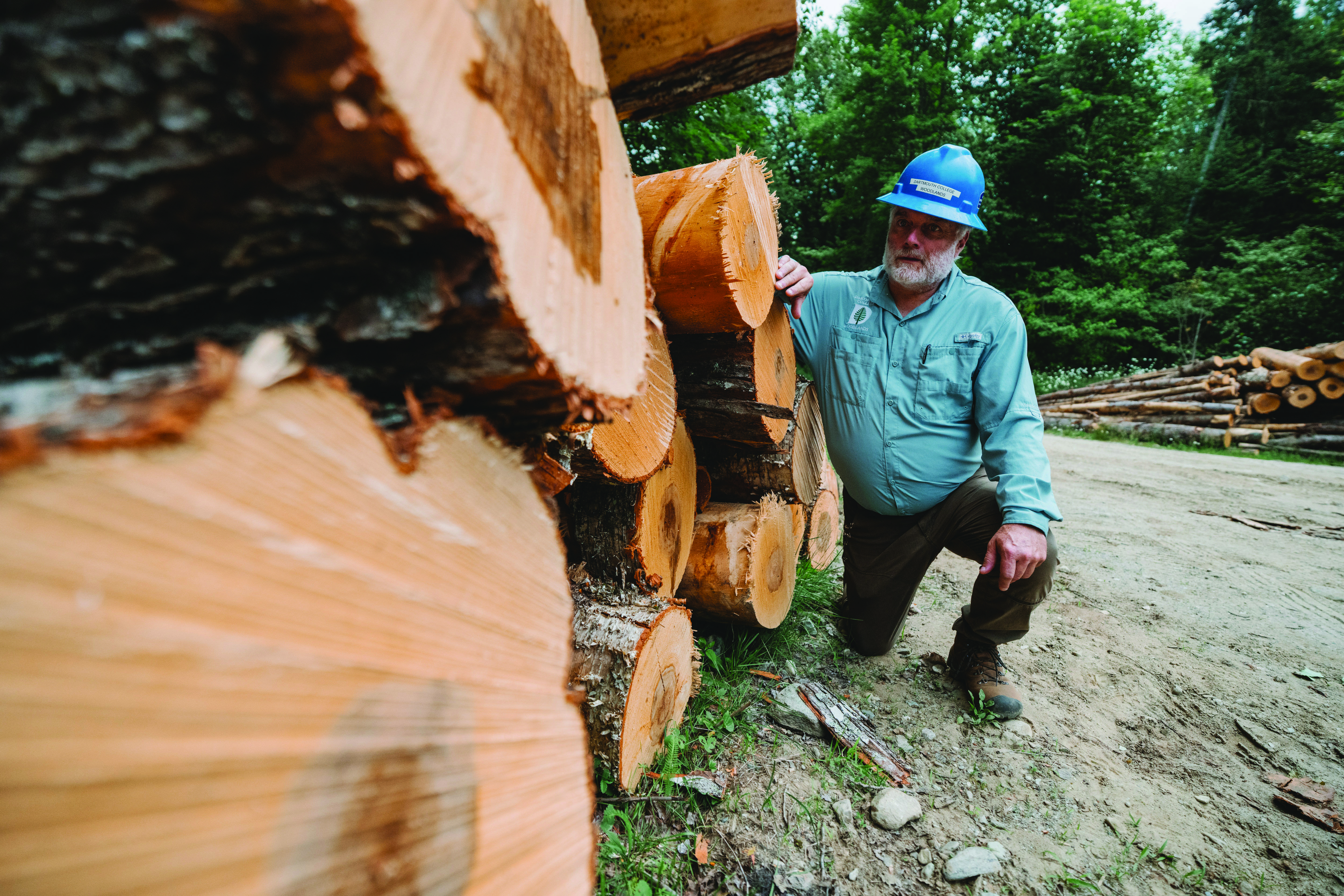
“It’s really tough to witness some of the challenges we’re facing,” says Tony D’Amato, a forestry and ecology professor at the University of Vermont who’s overseeing an ongoing long-term study on silvicultural practices in the Grant. “Not only are we seeing declines in the amount of snowpack but in general people estimate that we’ve lost anywhere from four to eight weeks of frozen ground conditions during the last several decades.”
The warmer months have also been marked by increasingly unpredictable weather patterns, with extreme precipitation and drought events hitting the area in almost equal measure. On July 10 in both 2023 and 2024, northern New England faced so-called “hundred-year storms” that caused catastrophic flash flooding in much of Vermont and New Hampshire. Then the summer of 2025 brought New Hampshire its worst drought since 2000—forcing the College to replace its cherished Homecoming bonfire with a laser light show.
“It’s coming from two directions,” D’Amato says. “If all we would have to worry about was warming temperatures it still wouldn’t be great, but that would maybe at least allow us to sleep a little more at night.”
All of this has made managing the timber harvest in the Grant a tricky business. In the last five years, the College has revised its yearly harvest target down to around 6,500 cords in an expectation of further uncertainty. But with inconsistent logging conditions, the College has been coming away with closer to 4,500 cords per year since 2020, often failing to eke out a profit.
“One way to look at it is that trends related to climate change are amplifying these challenges that might otherwise still exist,” says Mark Berry ’94, a forest conservation professional with the Nature Conservancy in Maine who volunteers on the Grant management committee.
In 2023, looking to stabilize its forest revenue, Dartmouth entered into an agreement with Sappi, an international paper and pulp products company.
As a multinational company, Sappi is better prepared to absorb some of the instability of the region’s changing climate and volatile timber and pulp markets. Previously, Dartmouth had drawn from a dwindling pool of independent loggers to haul out the wood. Now it sells its trees directly to Sappi to haul to its mills using its contractors. “Basically, what we’re providing is a contractor and a market,” says Charlie Hall, a forester for Sappi.
Evans is optimistic about the partnership, though he expects the College and Sappi will experience growing pains as they settle into what he calls “a new normal” of unpredictable logging conditions.
A recent study from the University of New Hampshire found that the “vernal window”—or mud season—in the Northeast could lengthen by as much as 28 days during the course of the 21st century. That means ever shorter winters and less reliably frozen ground to cut wood on in the Grant. The trick, Evans says, is going to be to harvest as much as possible, take things as they come, and be ready to adjust.
“We are in a time of transition, and we will find a way to get back on top,” Evans says. “It just won’t be the way we have done it for the last 40 years.”
Habib Sabet is a writer who lives in Vermont.