


After the publication of his 2009 acclaimed debut story collection, In Other Rooms, Other Wonders, set in Pakistan, Daniyal Mueenuddin spent a decade working on a novel set in the Midwest and New York. But that project, whose main character was based in part on his Norwegian-American mother, never quite jelled.
“I couldn’t get at it, somehow,” the author recalls. “It had a flaw in the middle, but I kept working on it, year after year.” In 2021, he finally “took courage,” as he puts it, and set that manuscript aside. “At that point I thought, I need to reasonably quickly write something. It’s ridiculous how long I haven’t published anything. What immediately drew me were these delicious, wonderful stories set in Pakistan. I felt released from trying to write that other book and leapt in with great enthusiasm.”
That fresh start yielded This Is Where the Serpent Lives, a collection of four linked novellas published by Knopf in January, and the new book is proving worth the wait. In it, Mueenuddin makes a triumphant return to contemporary Pakistan, where he spent many of his formative years on his father’s large farm about halfway between Lahore and Karachi. Like his first book, This Is Where the Serpent Lives explores the country’s cultural and economic evolution through the lives of several key characters, including Yazid, an abandoned boy who grows up to join the staff of a large country estate owned by Colonel Atar, and Saqib, a fellow servant with similar upward mobility until he runs afoul of the corrupt Punjab police. “They’re similar characters, these two guys,” the author says. “Because of slight differences in their temperaments and circumstances and the different times in which they came of age, their stories have quite different outcomes.”
As with In Other Rooms, a finalist for the Pulitzer Prize and the National Book Award, This Is Where the Serpent Lives—parts of which were first published in The New Yorker—has received a warm welcome. In The Washington Post, Porter Shreve praised the book’s unique structure, characters, “exquisite prose, [and] vivid, capacious sense of place.” The New York Times critic Dwight Garner called it “a serious book that you’ll be hearing about again, later in the year, when the shortlists for the big literary prizes are announced.”
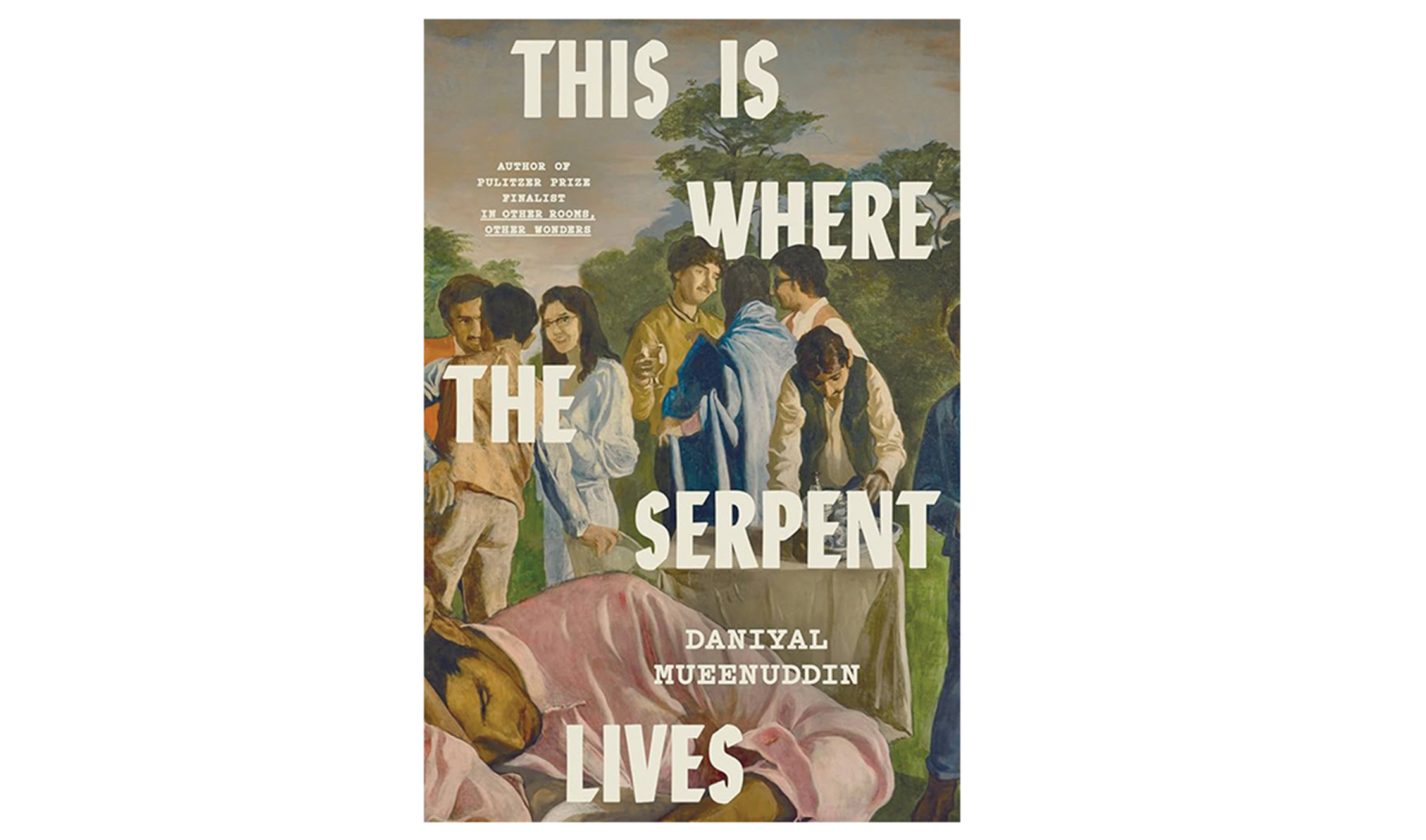
Unlike the loosely connected stories in his first book, the component parts of the new book—which the author and his publisher chose after some debate not to call a novel—are bound tightly together. “I thought a lot about how these stories would link together, and I wrote them thinking about how they would relate to each other,” Mueenuddin says. “It’s all about presenting an appetizing dish to the reader.”
Two other main characters, Hisham and Nassim, are brothers who went to Dartmouth, where they battled each other for the love of the same woman, Shahnaz. “It was fun to give a little shoutout to my alma mater. I went full geek at Dartmouth,” Mueenuddin says with a smile. “I was always reading and studying on the eighth floor of the Baker Library, where I had my own coffeemaker hidden behind some books and, later, a girlfriend.” It was also at the College where he first read the modern poets, especially Elizabeth Bishop and Constantine Cavafy, and novelists including Dickens, Proust, Joyce, Mann, and Nabokov, who would later influence Mueenuddin’s writing. In January he gave a bookstore reading in Hanover and had dinner with Peter Bien, the retired English professor who introduced him to those writers and who now lives, “still hale and hearty” at 92, near campus. “He had a really transformative influence on my life. I was delighted to see him again,” Mueenuddin says.
It’s all about presenting an appetizing dish to the reader.” —Daniyal Mueenuddin
These days the author, now 63, spends most of his time in Oslo, Norway, as a single father sharing custody of his two young children. “It’s a great place to raise kids,” he says. He travels regularly to check on his family farm in Pakistan, which employs a large staff to grow hundreds of acres of mangoes, sugar cane, cotton, rice, wheat, and greenhouse vegetables. (Yazid is modeled after an old friend who worked as a manager at the farm and now lives in the mountains of Kashmir.) Mueenuddin is already at work on a new book, also set in Pakistan, this time in the 1960s and ’70s.
“It’s about a love triangle, and one that I’ve been thinking about all my life,” Mueenuddin says. “I think this present book is very harsh—that’s my strongest criticism to myself. I wish it had more milk of human kindness. So I’m very much looking forward to writing a love story. As I get older, I think love is the most important thing of all.”
Kevin Nance, a frequent contributor of DAM book reviews, lives in Lexington, Kentucky.