


The campus seems more and more Jewish each time I arrive in Hanover,” Ford H. Whelden, class of 1924, wrote in 1934 to Robert C. Strong, then the College’s admissions director.
“I am glad to have your comments on the Jewish problem,” Strong wrote back.
Dartmouth President James O. Freedman read that candid exchange in 1997 as he dedicated the new Roth Center for Jewish Life, a bright and airy complex near Occom Pond where I would soon be spending many a Friday night during my own four years in Hanover.
His invocation of historic antisemitism among the nation’s most elite colleges made national news. “We must confront the ghosts of the past and recognize that we have a history that‘s not commendable in this respect. It’s not just Dartmouth, it was the same at Harvard and Yale,” Freedman told The New York Times. Fairly or not, the College was always seen as more hostile to Jews and other minorities than its peers; Freedman wanted to be clear this hostility was not just a Dartmouth problem.
Three decades later, there is much less need for the kind of anguished introspection that Freedman had found necessary. “I’m bullish on Jewish life at Dartmouth right now,” says Rabbi Moshe L. Gray, who runs the Rohr Chabad Center at Dartmouth, a Jewish student center in Hanover closely tied to but not directly affiliated with the College. “It’s never been more vibrant.” Shabbat dinners can get so packed, Gray says, that food runs out. Mazel tov to that.
But in what may have been a vestige of the era evoked by Freedman, Dartmouth was, until recently, the only Ivy without a Jewish alumni association. That changed in 2024 with the creation of the Dartmouth Jewish Alumni Group (DJAG), founded by Joie Jager-Hyman ’00 and Brian Taylor ’06 amid rising campus antisemitism nationwide.
The group first surfaced in a public letter defending President Sian Leah Beilock in May 2024 for calling in state and local police to arrest peaceful pro-Palestinian protestors who had begun pitching tents on the Green. Still relatively new to Hanover, Beilock faced the kind of blowback—including a vote to censure her by the arts and sciences faculty—that many administrators don’t survive. But DJAG’s founders thought her response was commendable. They praised Beilock, who is Jewish, for “great clarity of purpose and moral conviction.” They loved where she was going, where she seemed to be taking the College.
“It started with pride,” Jager-Hyman told me as she, Taylor, and I met for dinner in New York City. Two and a half years after Hamas’ terrorist attack on Israel on October 7, 2023, Dartmouth remains the only Ivy League school not to have faced either federal or congressional investigation for alleged antisemitism—although acts of antisemitism still occur. Last September, someone drew a swastika outside a Jewish student’s dorm room. Beilock’s detractors (including many who have written letters to this magazine) have charged her with appeasement, as when she went to Washington, D.C., to meet with Harmeet Dhillon ’89, the conservative activist now in charge of the U.S. Department of Justice’s crucial civil rights division. Like many American Jews, Jager-Hyman and Taylor are hardly “Make America Great Again” boosters. At the same time, they are proud that Dartmouth was, in their view, one of the few colleges to emphasize civil discourse rather than demonstrations and encampments.
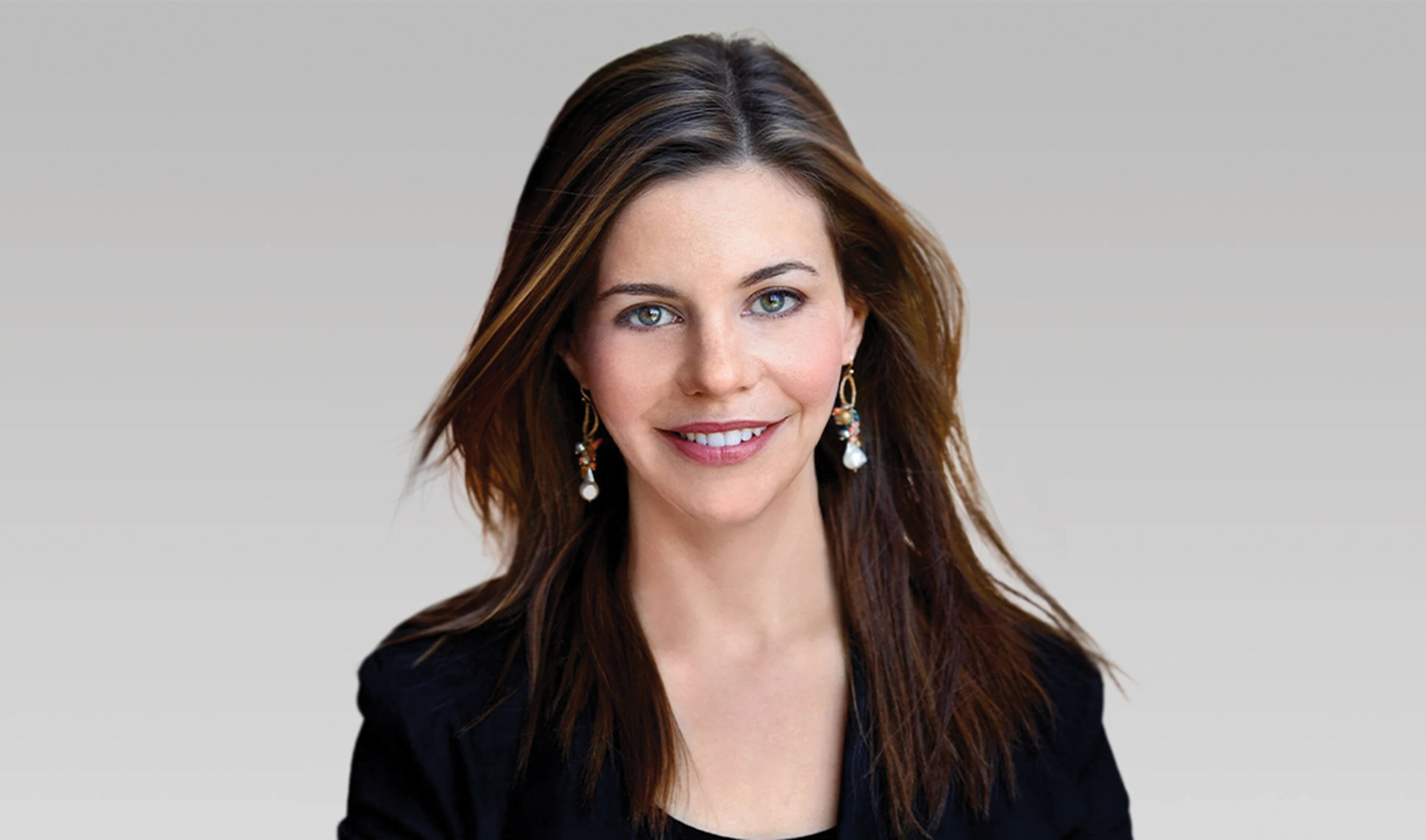
When she stood up for Jewish students, Beilock was standing up for the values Dartmouth has always held dear, DJAG’s founders contend. Whatever legitimate complaints there may be with Israel, they say, the protesters were unleashing anarchy that did nothing to help the Palestinian people—and was antithetical to how students at the nation’s best colleges should behave.
“We’re builders,” Jager-Hyman says. As far as she is concerned, Jewish alumni feel a profound gratitude to Dartmouth, which has a Hebrew inscription on its seal. In addition to founding DJAG, she and her husband have started a Jewish studies fund at the College.
DJAG’s founders say they want to preserve the fragile balance that has Dartmouth, the smallest and most remote of the Ivies, demonstrating how to handle an immensely complex moment, how to hold a conversation instead of shouting, how to emphasize education instead of indoctrination, how to use the College’s size and location to create the kind of intellectual communities that can be difficult to form elsewhere.
Current debates about Israel and campus activism can obscure the remarkable journey Jewish students have traveled from the 1930s, when Whelden could openly complain about their presence on campus.
There’s a lack of agreement on whether Dartmouth ever had specific quotas for Jewish students. Mark Oppenheimer, a Yalie who chronicled the history of Jews in the Ivy League in his podcast, Gatecrashers, says there were no specific quotas across the Ivies. But, in a recent letter to this magazine, Matthew Skrod ’24 said his archival research found that Jewish quotas at Dartmouth were “hideously institutionalized.” Either way, there was pressure to keep Jewish numbers down.
During the first several decades of the 20th century, the Ivies’ unstated goal was to “squeeze the number of Jews down into the single digits,” Oppenheimer says. That began to change during the Cold War as the Soviets’ launch of the space satellite Sputnik focused higher education on fresh priorities that favored brains more than background.
“It was no longer tenable to admit one or two students from Bronx Science or Boston Latin,” according to Oppenheimer, referring to selective public schools known historically for large Jewish populations.
John G. Kemeny became the first Ivy League president of Jewish background in 1970, but the College’s rural location, outdoorsy culture, and robust Greek system seemed to appeal much more to the legacy applicant from Exeter than to the striver from Stuyvesant two generations removed from the shtetls of Russia or Poland. The hard-edged provocations of The Dartmouth Review, including the placement of a Hitler quote on its masthead in 1990, which caused national outrage, did not help.
The percentage of Jews in the Ivy League student body—and their influence on campus life—rose throughout the 1970s and 1980s, culminating during the Bill Clinton years, Oppenheimer says, as Jews benefited from meritocratic institutions that no longer discriminated against them. The “outsider era” of Jewish life in America was over, Seymour Martin Lipset and Earl Raab wrote in Jews and the New American Scene, published in 1995, just a year before Jager-Hyman showed up in Hanover.
Since then, Dartmouth’s Jewish population has hovered around 10 percent—well above the estimated 2.4 percent of the U.S. population overall—while other schools with higher percentages saw their enrollments of Jewish students plummet. Yale experienced the sharpest drop, from 25 percent of the student body to 12 percent. Harvard and Penn saw similarly sharp drops, the cause of which has been vigorously debated.
Is Dartmouth’s steady Jewish population a testament to the College’s commitment to rectifying past wrongs? Maybe, but probably not. It does mean that while other schools became markedly less welcoming to Jewish applicants, Dartmouth held firm. Sometimes, that’s all it takes.
Jager-Hyman arrived at Dartmouth in the fall of 1996. She had been raised in Roslyn, New York, a prosperous suburb on Long Island’s North Shore with a large Jewish population. Her grandparents are “survivors of several concentration camps, including Auschwitz,” she says.
Hanover was a culture shock, as it is for anyone not accustomed to this patch of northern New England whose inhabitants view modernity with skepticism. But the kind of antisemitism Freedman described never materialized during her time at Dartmouth. “I felt proud to be Jewish. I felt zero antisemitism. None,” Jager-Hyman recalls. Many of her friends on campus were not Jewish, she says, and she made strong connections with Muslim peers. If there was pressure to conform, it was applied ecumenically. Everyone learned the glories of L.L.Bean.
Everyone is welcome.”
—Joie Jager-Hyman
After graduation, Jager-Hyman worked as a Dartmouth admissions officer (she admitted Taylor, a fellow Roslyn native). After they both graduated and returned to New York, they became friends and professional competitors, running two of the most prestigious college admissions consultancies in Manhattan. Jager-Hyman, whose hard-charging style found its way into HBO’s And Just Like That…, was at College Prep 360; Taylor, whose side hustle is working with celebrated writer James McBride on screen adaptions of his novels, at Ivy Coach.
The pair hatched the idea for DJAG in the aftermath of the October 7 attack. As intense protests against Israel’s military response shook other campuses, Dartmouth remained peaceful. Beilock, who had ascended to the school’s presidency four months earlier, was navigating her first crisis.
Reviews of her response in the weeks and months that followed have been the subject of intense debate by Dartmouth students, faculty, and alumni to say nothing of national outlets that have both celebrated her steadfastness and branded her a Trump collaborationist. From the perspective of DJAG’s founders, her response was pitch-perfect, balancing the need for campus security with a year of honest dialogue about one of the most divisive issues on Earth.
On the night of May 1, 2024, Beilock faced her biggest test. As darkness fell, students and faculty gathered on the Green in Hanover to form a pro-Palestinian encampment similar to those that had sprung up at Columbia and other universities. Beilock responded quickly by calling the police, leading to a massive law enforcement response. Dozens were arrested, including two student journalists and history professor Annalise Orleck, 65 at the time. “The campus is in an uproar,” Orleck told The New York Times. “Neither the students nor the faculty have been as radicalized in a long time as they’re feeling today.”
Three weeks after the arrests, Beilock was censured by the arts and sciences faculty in a 183-163 vote. Much of the coverage in The Dartmouth was critical, at least in the opinion pages. One op-ed, written by a 2007 alumnus, suggested that Beilock should apologize for establishing “a precedent of institutional violence against student dissent.”
Taylor and Jager-Hyman noticed, as did many other alumni who were reading The D closely that spring. “There must have been 12 editorials that were all against her for the arrests,” Taylor told me over dinner. The pair’s letter, which was published on May 7, amounted to a rare show of support for Beilock during that time.
Proud of their alma mater, Jager-Hyman and Taylor wanted to connect with other Jewish alumni. Once they discovered that no such group existed, they realized they had to form one—and DJAG was born. Its first major event took place in the summer of 2025, a Zoom conversation with Beilock that more than 100 alumni attended.
“It was genuinely amazing and inspiring to see her dedication to building a safe and strong Jewish community at Dartmouth—which extends to alumni,” Jager-Hyman says.
Part of being a Jewish group involves fostering a stronger connection between the Dartmouth campus and the Jewish state. On a recent morning, Jager-Hyman hosted a meeting with Dartmouth Kalaniyot, a group cofounded in 2024 by math and computer science professor Dan Rockmore and psychological and brain sciences associate professor Jeremy Manning that aims to create new partnerships and collaborative efforts with Israeli academics at schools such as Technion in Haifa and Hebrew University of Jerusalem.
“I think some of the best academic work is coming out of Israel,” Jager-Hyman says. “I also think normalizing the humanity of Israelis and Israeli academics is important.”
With her trademark Long Island bluntness, Jager-Hyman acknowledges critics of Israel want to ostracize Israeli researchers for the war in Gaza, but she says they’re wrong. “These people,” she says, “have nothing to do with politics, and the research has nothing to do with politics.” In her view, welcoming Israel’s top-flight researchers while other schools spurn them is an unequivocal win for Dartmouth.
It’s all a far cry from the days when Jewishness was something to play down once the spire of Baker Tower came into view. Jager-Hyman hopes to use her considerable connections to stage events in New York City and elsewhere. And she hopes to attract not only Jewish grads but also “any alumni interested in allyship or just a sense of community,” as she put it in a text message. “Everyone is welcome.”
Alexander Nazaryan writes about politics, culture, and science.