


Editor’s Note: You can listen to an audio version of this article on BeeAudio, an audiobook production company created by Roy Forbes ’84. The narration was created with an AI-generated replica of the voice of Ric Lewis ’84, former trustee of the College. Many magazine and news sites use AI-generated audio recordings. DAM is interested in hearing from you. Is it helpful to have an audio version for a written article? You can provide feedback here.
The College has created its own conversational chatbot, Dartmouth Chat, that can instantly answer any imaginable question. The Center for Career Design encourages students to use artificial intelligence to explore careers, write job applications, and practice for interviews. Soon, another Dartmouth chatbot, this one named Evergreen, may offer students personal advice on everything from relationships to Greek life. That’s only the beginning.
The College is on the front lines of what could be the biggest technological upheaval since the Industrial Revolution. The first Ivy League school to embrace AI at the institutional level, Dartmouth aims to lead in a field that threatens to upend the way we live and learn.
President Sian Beilock wants the College—birthplace of the term “artificial intelligence”—to become a model for other schools while helping tech companies define the responsible use of AI in higher education. To help make that happen, last year administrators signed a deal with AI giant Anthropic for campus-wide, secure access to Claude for Education, a chatbot designed for universities.
Embrace of AI is not universal. Many faculty members have deep reservations about bringing the technology into the classroom. Even students who have grown up with AI feel threatened by the breakneck pace at which it is changing society—and education. “We need guidance!” Caroline Menna ’29 lamented to The Dartmouth this spring.
The College is trying. A faculty leadership group released a report in June that laid out broad guidelines for teaching and learning in the age of AI. However, the technology is changing so fast that it’s hard to stay ahead.
Even Fans Are Nervous
On the first sunny day of spring term, 16 students gather in a windowless classroom in the Engineering and Computer Science Center to listen to one of their peers give a slide presentation about theoretical machine learning, the study of how AI works. These members of the Dartmouth AI Club, which Paul Cherian ’27 started with support from the computer science department, meet every Tuesday to talk about the latest trends.
Arses Prasai ’28, a computer science major, has his hand up with questions almost the entire time. He says he only started coding and using AI during his freshman year; now he is considering a Ph.D. in theoretical machine learning because he wants to understand the algorithms that power AI.
“It’s a bit scary,” he says. “We are reaching a stage where none of us understands any longer how AI works and what’s happening inside the models we have created. We have to take a step back and make sure it’s safe.”
Prasai also worries that AI can disrupt the learning process itself, which is why he tries to avoid relying on generative AI—a type that can generate content and ideas in response to a prompt—in his learning. “Knowledge has become cheap,” he says. “True learning takes time and effort, and AI makes it harder for students to actually go through the struggle of real thinking and learning when there’s always that temptation to take a shortcut.”
Menna, who is considering a major in economics, worries about the lack of guidance on the proper use of AI. Last spring, she published an op-ed in The Dartmouth in which she entreated the College to set clearer guidelines. “We definitely are the AI generation,” she says. “We may seem more familiar with AI than some of the faculty, but there’s a lot we don’t understand.”
AI has become so ingrained in her life and learning that she’s not always sure what’s allowed and what isn’t. “What if I got some of my sources for a research paper from a Claude prompt and then realize later that I wasn’t supposed to use any AI in that class?” she asks. “Do I then have to self-report as having cheated?”
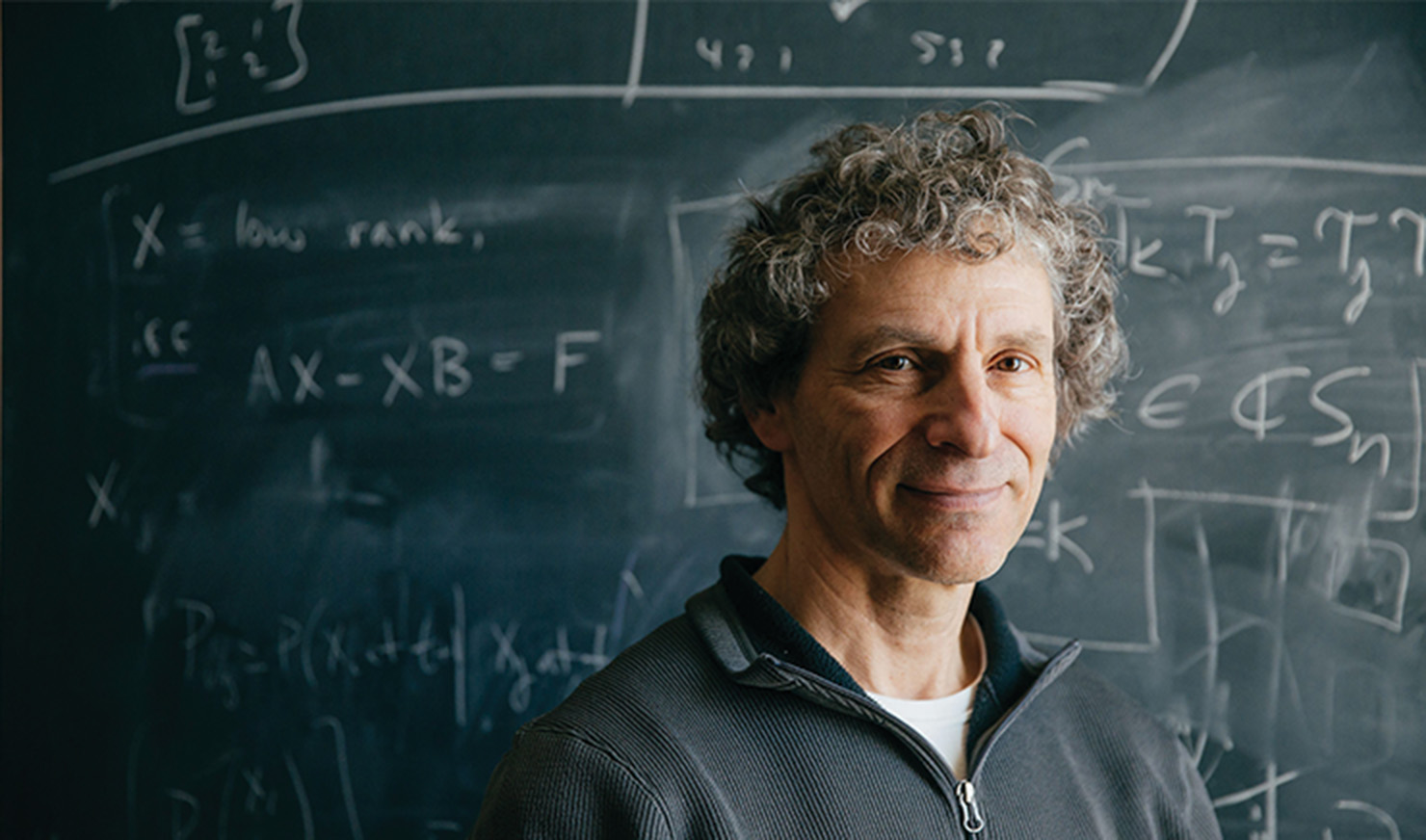
When writing was invented, people started to think differently. ... When calculators were invented, we started thinking differently—but that’s not necessarily bad.”
—Dan Rockmore
Menna also worries reliance on AI may diminish the thinking skills of her generation. As students increasingly turn to AI for instant answers, Menna fears they risk losing intellectual curiosity and the ability to live with uncertainty. “If we already know everything, why would we be here at Dartmouth?”
Loss of Trust
Generative AI has already forced faculty to rethink the way they teach. Many professors say it has become impossible to judge whether student work is original or AI-generated. Many faculty have returned to traditional, in-class, blue-book exams. Even computer science students must now show their competence by writing out code with pen and paper.
“We went back to the Stone Age and are assessing students without a computer,” says Andrew Campbell, professor of computer science and codeveloper of the Evergreen app. “The temptation to cheat is just too great because Claude now codes better than the best software engineers.”
“I believe we’re at a fundamental shift in education,” says Petra Bonfert-Taylor, professor of engineering and an associate dean at Thayer. “None of us knows where this is going.” She no longer focuses on teaching her students how to code but instead tries to teach them how to evaluate AI-generated code to fix it when it goes wrong. Last winter, she experimented with an AI tutor in one course. Most students reacted enthusiastically to the tutor, which was trained on the course materials and lecture notes so that it could guide learning according to the sequence of the course. The tutor could engage in dialogue with students and offer activities to test if they were keeping up with the material.
“But I have to be super nimble in my teaching,” says Bonfert-Taylor. “The technology changes every semester, and it’s not really sustainable for me to redesign my course with every new development in AI.”
As the College offers more and more AI-focused courses, including a new master’s in AI, Bonfert-Taylor is on the leading edge. The June report from the faculty leadership group acknowledges that AI is a major disruption to learning and teaching to which institutions have not responded strongly enough. The group suggested establishing campus-wide “AI literacy” efforts for both students and faculty and recommended instructors formulate clear AI policy for their courses, whether they allow its use or ban it altogether.
“It’s not enough to just tell students in orientation week not to use AI,” says James Dobson, associate professor of English and creative writing and a member of the faculty advisory group. “They need more guidance.” Dartmouth’s agreements with AI companies talk about “AI fluency,” he says, “but what we need more than fluency is AI literacy, which is not just a matter of knowing how to use the technology but to also have a critical understanding of its uses, drawbacks, and dangers.”
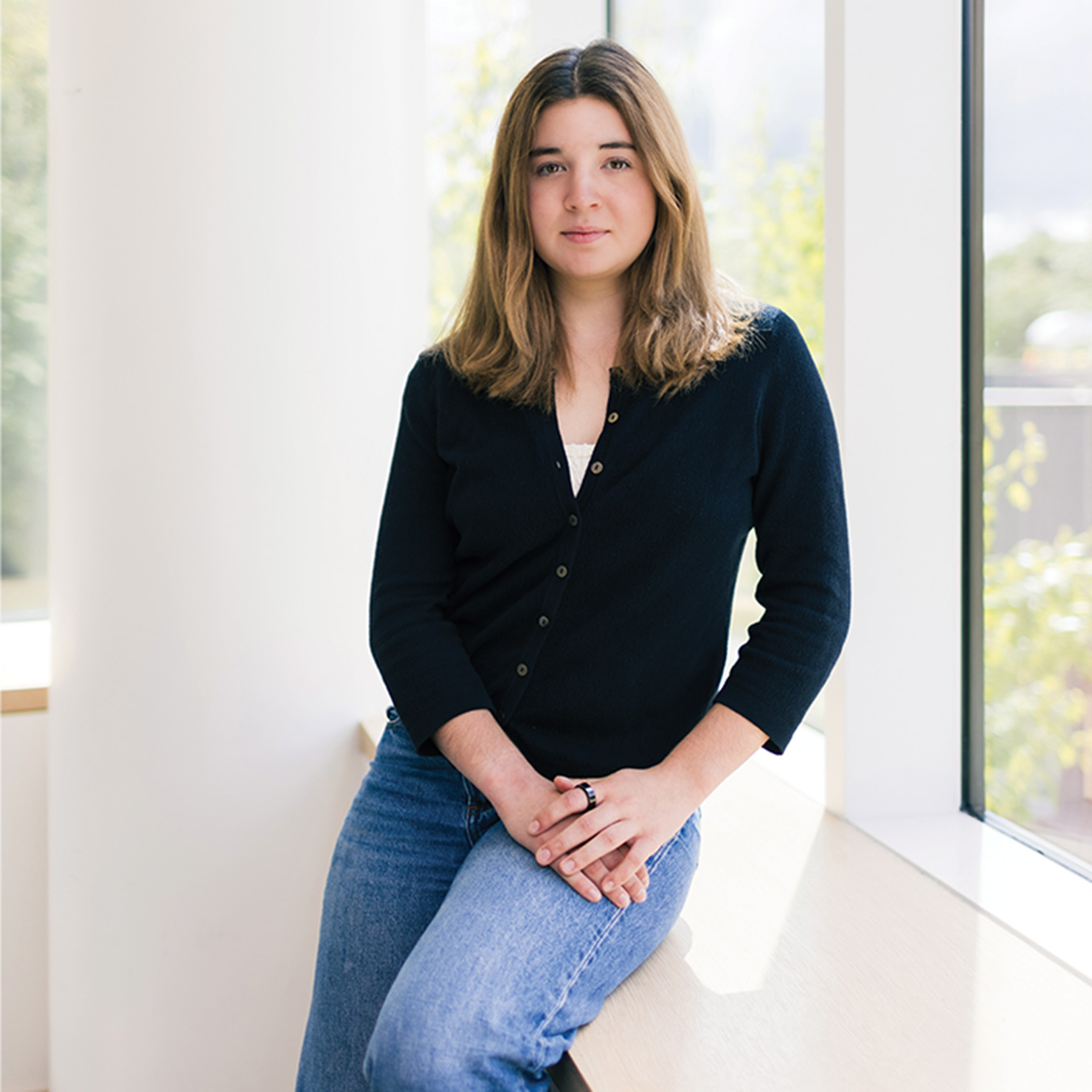
We definitely are the AI generation.”
—Caroline Menna ’29
“Be More Human”
Dan Rockmore, professor of math and computer science and director of the Neukom Institute for Computational Science, has embraced AI. In a 2025 essay in The New Yorker, he enthused about how brainstorming with a chatbot expanded his thinking. To those who worry that it will dumb down society and lead to “human enfeeblement,” he argues that, throughout history, every new technology has changed the way we think.
“When writing was invented, people started to think differently,” he says. “When print came along, people started to think differently; when calculators were invented, we started thinking differently—but that’s not necessarily bad.”
Rockmore points out that Socrates was right when he famously warned that writing technology would diminish human capacity for memorization. “But cognitive scientists would say that, because we stopped having to memorize all this stuff, we freed up certain cognitive abilities to do other things,” he says.
Still, in the classroom, Rockmore discourages the use of computers. Chatbots may be more efficient in conveying information than human beings and could potentially take on the role of a lecturer, but he notes that they lack empathy, spontaneity, and intuition, essential qualities for a teacher to guide students in the age of AI.
“Oddly enough, we’ll have to be more human,” says Rockmore, “because if we teach like machines, we might as well let the machine do it.”
Rockmore says the main role of a teacher isn’t necessarily to convey information. It may be even more important to serve as a role model, coach, or connector who makes impromptu associations that an algorithm can’t conceive of. He considers the unpredictability of the human mind not as a flaw but as an asset. “I don’t mind if students think of my classroom as a little chaotic,” he says.
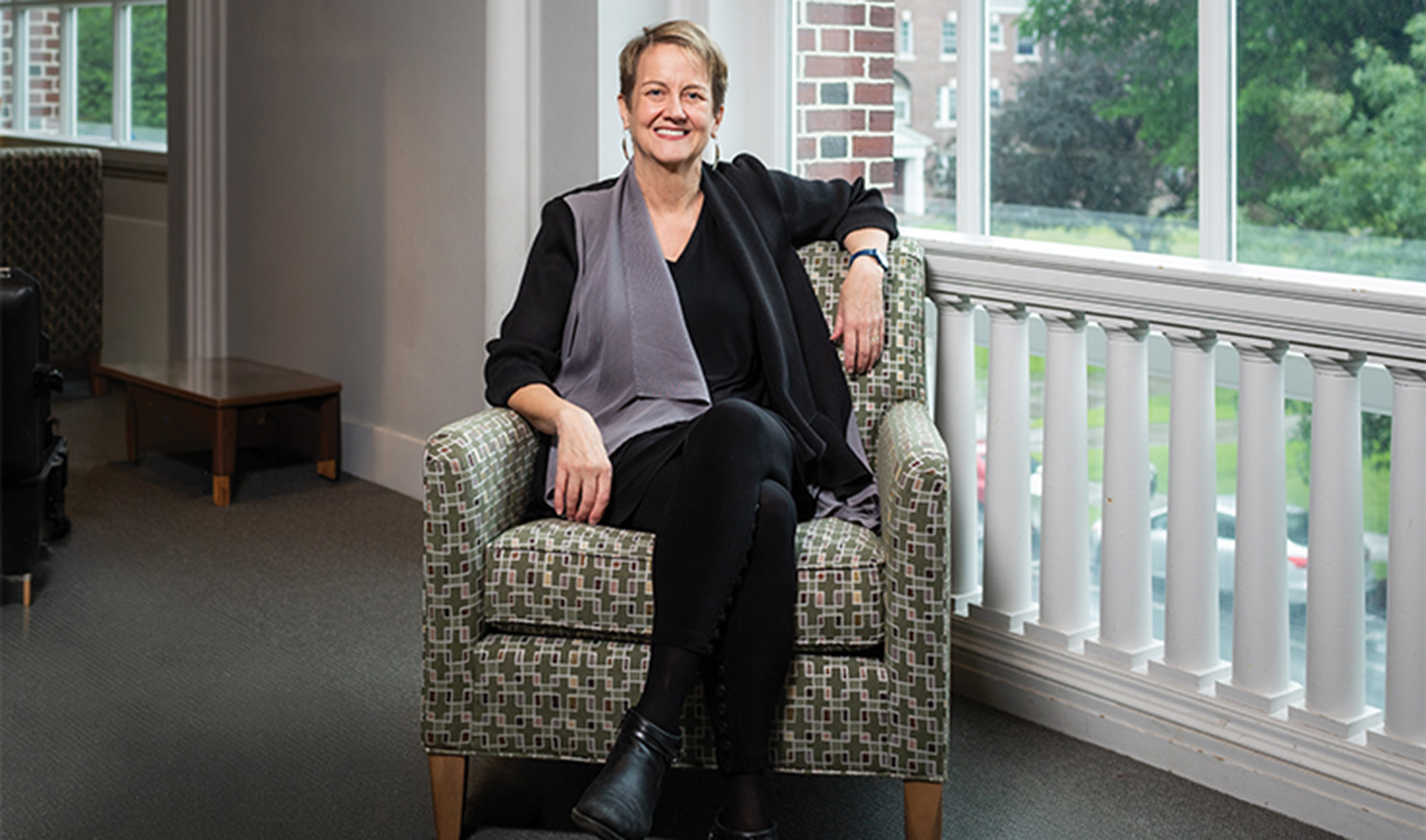
What we're witnessing thus far is just greater inequality.”
—Susan Brison
What About Learning?
Provost Santiago Schnell thinks that Dartmouth, as an elite liberal arts college, can exemplify what human-centered higher education looks like. He envisions more oral consultations, more seminars, smaller classes, and more one-on-one interaction between faculty and students. “AI technology is a tool that can challenge our thinking, make our work more efficient, and accelerate research,” he says, “but it must be used to enhance our humanity and not erase it.”
The provost faces resistance from faculty. A 2025 report on AI, composed by Dobson, found that 60 percent of Dartmouth professors are skeptical of the benefits of engaging with AI and worry about the negative effects on students’ educational experience. At a panel earlier this year to present the College’s deal with Anthropic, Schnell was interrupted by faculty who complained that the administration hadn’t been transparent in making the deal and was pushing generative AI into classrooms despite faculty objections. The provost assured them that the use of AI in the classroom is not mandatory.
Resistance to the deal stems in part from many professors having been in litigation against Anthropic. Although Anthropic pitches itself as the ethical alternative to other AI companies, it trained the algorithm that created Claude on millions of pirated books, including works by more than 130 Dartmouth faculty—Beilock among them. The company last year agreed to a $1.5-billion settlement with thousands of authors for illegally downloading and using their books. Asked about the lawsuit during the panel discussion, Schnell noted that Anthropic was never formally found guilty since the company reached a settlement.
“I just couldn’t believe that Dartmouth made a deal with Anthropic directly after it settled with 130 Dartmouth faculty,” says Molly Geidel, an associate professor of women’s, gender, and sexuality studies who leads a faculty anti-AI group. “There’s something so obviously dishonest about stealing people’s work wholesale and then selling it back to the very universities and faculty whose brains it came from. That’s so audacious!”
Geidel opposes generative AI in education and believes there is still time to choose a different path.
“It’s really hard to fight these narratives of inevitability and progress,” she says, “but not everything that’s considered ‘progress’ is good. We shouldn’t embrace a bad future just because we’re told it’s inevitable.” Together with other faculty skeptical of AI, she collaborated on a series of sci-fi killer-robot film screenings at the Hopkins Center for the Arts. “It’s as if these tech CEOs have never watched movies or imagined what can happen,” she says. “It often doesn’t turn out so well for the humans.”
A Growing Digital Divide
“What we’re witnessing thus far is just greater inequality,” says Susan Brison, professor of philosophy and director of the Susan and James Wright Center for the Study of Computation and Just Communities. Brison teaches a course on the ethics of AI in which she discusses how it affects issues such as trust, personal relationships, free speech, and justice. She worries that as AI concentrates wealth and power in the hands of the tech elite, it may divide society into those who control the technology and a majority who are controlled by it. She expects most Dartmouth graduates will do fine in such an AI economy, but thinks the College has an obligation to provide students with ethical awareness.
“It’s the more vulnerable people who will suffer most from the environmental destruction and inequality that AI perpetuates,” she says. Even if Dartmouth graduates end up on the winning side, Brison thinks something is lost when we give ourselves over to AI. “AI feeds into this culture of efficiency,” she says. “Everything is sped up. It’s supposed to remove all the obstacles and ‘optimize’ everything. But life is not about efficiency; it’s about embodied relations with other people.”
She recounts hearing about an app that would help students choose a career path by feeding their information into an algorithm that would then guide them through their undergraduate years and suggest the optimum choices for professional career advancement. “I found it terrifying,” says Brison. “It’s exactly the chance encounters and serendipities that make life meaningful. What is left if we just streamline life and let AI decide for us the most efficient way to live?”
Provost Schnell argues that academia has to address the technology because it won’t go away. “It’s impossible to ignore AI,” he says. “This is an inflection point.” He, too, has concerns about the misuse of AI but contends that “we need to get into the trenches, get evidence, and find out what it is good for and what makes it terrible.”
Roopika Risam, professor of film studies and chair of the pedagogy faculty committee on AI, says it’s urgent that students gain a deep understanding of AI, both the positive and the negative. In her recent book about how information has historically been used to control societies, Risam imagines a dystopian future in which AI has unquestioningly been adopted and an all-powerful AI corporation controls every detail of people’s lives. “My personal opinion,” she says, “is that every college student and every human being on earth should learn the critical skills to be able to understand the implications of AI.”
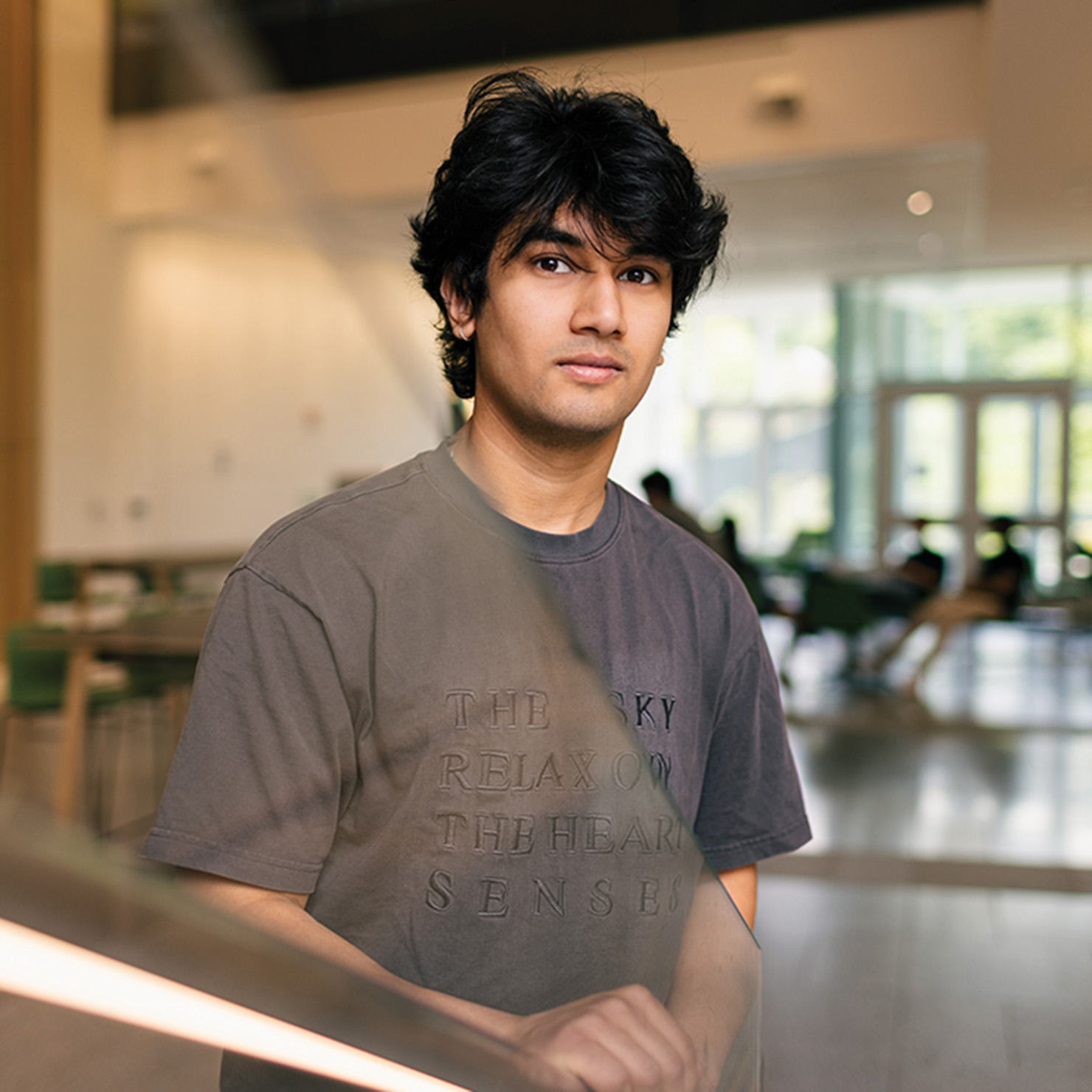
It’s a bit scary. We are reaching a stage where none of us understands any longer how AI works and what’s happening inside the models we have created.”
—Arses Prasai ’28
Writing By Hand
Yasmin Abouali ’26, who graduated last spring with a major in history, has been trying to slow down her life and reduce her dependence on electronics. She tries to minimize use of generative AI but finds it hard: “It takes a certain strength to try to be that one person to not use it, to make your life more difficult.”
She has noticed her younger brother’s reliance on generative AI already has impacted his writing skills.
“If you depend on AI to express yourself, then you have a problem,” she says. She finds it frustrating when classmates whom she suspects of having cheated with AI get better grades than she does. “Then I remind myself that they are losing out. I’m the one who is actually learning. I’m getting an education for myself to develop my own thinking and my own brain.”
Abouali recently started journaling with pen and paper. She says it’s important to inject a bit of beauty in life and not do everything just for the utility of it. “I love writing by hand,” she says. “It calms me down and helps me think.”
Judith Hertog is a freelance writer whose work has appeared in DAM, The Atlantic, The New York Times, and Foreign Affairs.
AI Conference on Campus
The College will host “Dartmouth AI@70: What Must Remain Human?” October 29-31 featuring discussions on AI in the classroom and the role of universities. Speakers include Amazon AI official Peter DeSantis ’98.