

I am about as qualified to be a software engineer as I am a neurosurgeon, but that doesn’t stop me from doing a programming job. I backed into it by accident after creating a database to manage phone calls for a 2012 political campaign. Donn Downey, a campaign volunteer who happens to be a forester, asked if we could adapt it for his industry.
The two of us didn’t expect the side project to evolve into our full-time job after the campaign, but that is exactly the sort of career meander liberal arts graduates will recognize. It made me think back to my brief friendship in the early 1990s with former Dartmouth president and computing pioneer John Kemeny.
He emphasized to me—and to anyone who would listen—how important it was for liberal arts majors to learn to apply computers in their work. At the time I was skeptical. “You think we liberal arts grads are going to matter much in the computer era?”
“I’m old and sick,” he said. “Give me the benefit of the doubt that I’ve grown some wisdom about what’s important in life.”
During World War II, Kemeny had worked on the Manhattan Project for physicist Richard Feynman as one of the “computers”—a term then used for people, not machines. Kemeny computed implosion hydrodynamics, trying to predict how a crushed sphere of plutonium would react in the chaos of a nuclear explosion. When one of the first general-purpose computers launched a year after the war, it could do the work of a thousand human computers.
Kemeny predicted the need for liberal arts would intensify as computers advanced, but for a long time that didn’t seem right. The more complex technology grew after I graduated with a government major in 1993, the more denominations of tech divided into specializations that seemed to defy the holistic consideration of liberal arts.
Working in the internet industry, I’d think of Kemeny at times through the booms and busts. Each fallow period allowed us to digest the previous boom’s new technology: the web; the ability to use applications online instead of just reading stuff; eerie deep learning systems that became artificial intelligence.
At our shoestring software company, Donn and I had to code out of necessity. When we could afford a developer, we wrote specs for him to rewrite the worst of our work. He would code to those notes with maddening specificity, meeting the letter of our specs but often not their spirit. Sometimes it felt we’d rubbed a sarcastic genie’s lamp. When we pointed out that a new feature had been added to the code but not made available to the user, he’d reply, “Oh, you wanted it to be surfaced on the interface, too?”
You can experience the same frustration if you stop by the Dartmouth Chess Club any Sunday evening. After my middle school son Turner beat some of the undergraduates at a local chess tournament, they invited him to their weekly events. On those evenings, students sometimes play a variant of chess called “hand and brain.” One teammate calls out a piece to play; the other decides how to play it. It is maddening in the same way as paying developers huge sums to move the pieces you call out—only to discover that the code only technically complies.
I am not good at chess. When I attend these evening matches, my only chance to tie is to distract, so I interrogate the players. What dorm do you live in? Did you know those rooms used to have fireplaces? What do you plan to do with a computer science degree?
Their answers have changed through time, as it’s grown increasingly difficult to land an entry-level coding position. More recently, students tell me they might want to teach or rely more on their non-STEM concentrations to look for a job. One told me, “If you get a job coding out of college, it indicates a problem.” The two nearest students nodded without looking up from their boards.
“How’s that?”
He said it would mean you got hired by a company that can’t figure out how to harness AI to do a lot of the coding work.
In March, Donn tried out an AI coding system to see what it could do. He fed it our data model and some specs we’d previously given to our developer. It produced most of our app in less than an hour, eliminating the need for countless hours of human coding. Within the week, we decided to use AI to code our next release, designed by us but coded by a virtual demigod.
On a recent Sunday evening, I played chess against Will Cashon ’27, a mathematics major from Maryland. To give myself a chance, I pulled out my iPhone to distract him.
I turned the screen to him and said it was the beta of the new forestry app we created, the one that made us think we should use AI for all our coding. As his time to make a move ticked down, I showed him how a forester could use a finger to quickly divide a parcel into individual stands of similar trees.
Will asked, “What defines an area as a stand?” I told him it involved several factors, but trees are especially sensitive to soil type. My diversion was working; he was looking at the screen. He asked why we don’t just list the soil types on the map. “Is that data out there?” he asked as he casually collected my bishop.
It was. There was a whole federal department that roved the United States testing soil and making maps. A half hour after returning home, I had stands in the app showing lists of the soils present, all coded by an AI named Claude. I showed Donn the next morning. By lunch, he had remade the maps to include the soils. Instead of guessing the soil type based on the trees, foresters using the app would see the geology.
We were doing what programmers derisively call “vibe coding,” but most coders wouldn’t have been able to come up with this juxtaposition of features. They didn’t have Donn’s forest expertise. Will had synthesized it all instantly.
I got a chance to thank him when Turner and I played at a tournament the next Saturday at Dartmouth’s engineering school. Will said he was pleased the map idea had proven useful. He sighed and said he wasn’t sure he was going to wind up using the programming-oriented courses he’d taken. “Most of us are looking for Plan Bs.”
“You ever hear of John Kemeny?” I asked. When he shook his head, I slumped. I explained how Kemeny had guided Dartmouth through a period of great change in the 1970s, including the admission of women. I said he was a great thinker, especially on the future of technology. That he coinvented BASIC, the first computer program that made it easy for beginners to use.
“I know BASIC,” Will said.
I nodded. It wasn’t enough that students took advantage of technology. Kemeny had wanted them involved because he wanted the great mass of generalists to be the ones harnessing it.
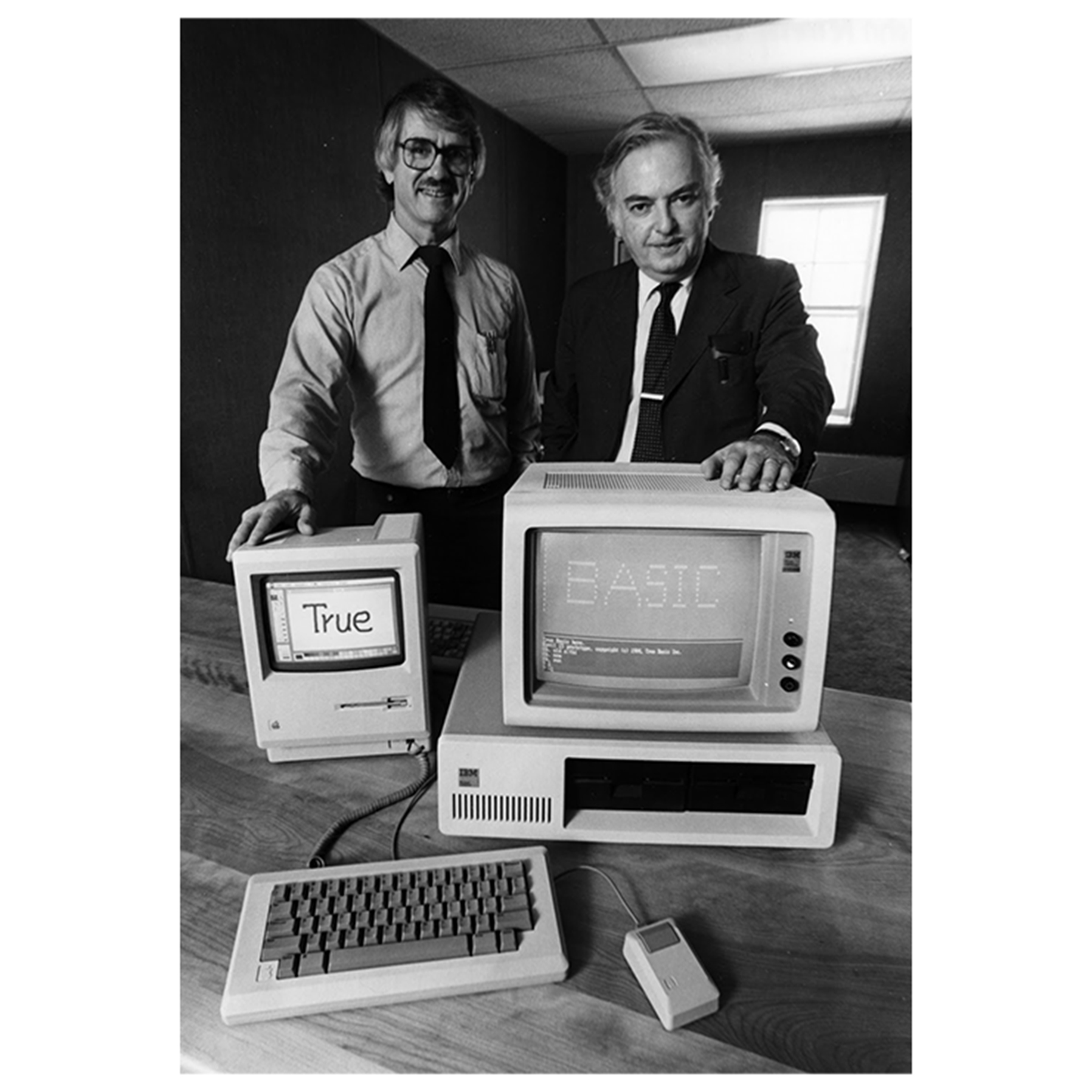
If Kemeny was right, I said, Will was the kind of person companies would want to hire—not because he was a computer science major or had graduated from a liberal arts college but because he embodied qualities from both.
Kemeny had said that when you have lots of unrelated ideas, you need to get “quite a distance away” to view the whole. It was what he trusted liberal arts majors to do: make sense of chaos and exercise judgment moored in a broader timescale. His experience working on the Manhattan Project left Kemeny doubtful that science alone had that capacity.
I was back in the sunshine 15 minutes later, having lost to a Kazakh grad student. She flattened me in 12 moves. My son was still playing, so I walked to the wood’s edge to look down the steep slope into the campus cemetery. It was full of hundred-foot white pines, but the gully hid their true stature; their tops rose above buildings no higher than ordinary trees. The pines love acidic sandy loam soils. Kemeny is buried here, near the valley bottom.
I brought up our app on my phone. Its map zoomed in on my location on the west side of campus. With my hand I touched the screen four times, defining the rough boundaries of the wood. The app sent back a soils map showing the steep slope in front of me was made of silt loam, a site perfectly suited for white pine. The land was in harmony with its flora, the soil’s acidity fed by a continuous shower of needles over the remains of Dartmouth presidents.
Tig Tillinghast co-owns Forest Metrix and lives in Thetford Center, Vermont.
The views expressed in this opinion article are the author's own.