

These athletes hope to compete in the 2026 Winter Olympics in Italy.
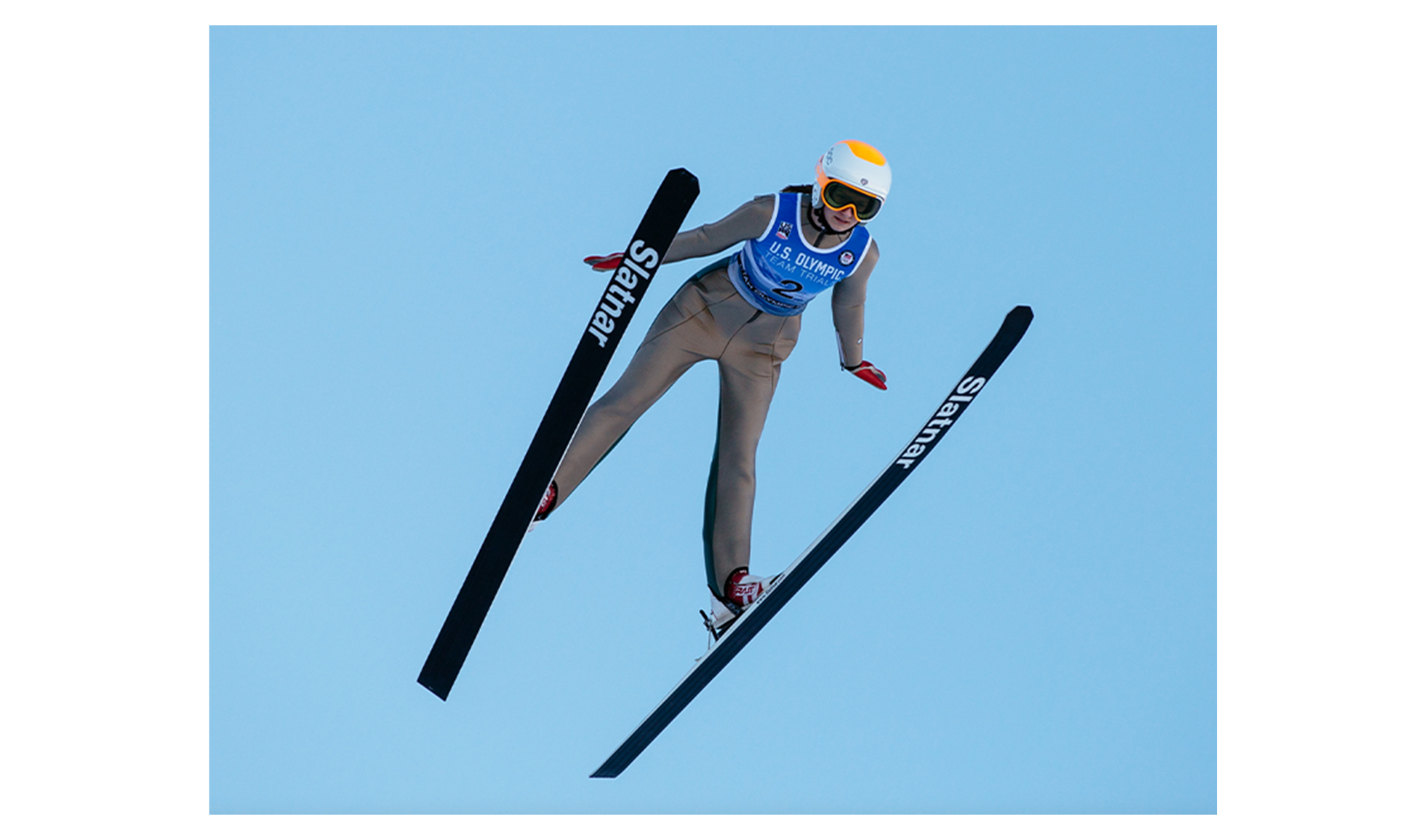
SAM MACUGA ’23
NORDIC SKI JUMPING
- Park City, Utah
- Major: Electrical Engineering
- World championship teams, 2021 and 2023; 10th in team normal hill, 2023 world championships; 12th in normal hill, 2023 Intercontinental Cup; six Top 10 finishes, 2022 Continental Cups; two Top 15 finishes, 2022 FIS Cup
How I got started: When my family moved to Park City in 2007, I did not ski because we were moving from Texas. But winter sports are super woven into the community, and following the 2002 Olympics that Park City hosted, the Youth Sports Alliance offered an afterschool program in all the elementary schools in the area, where any kid—even if you had no experience or couldn’t afford it—could try any winter sport. That’s how I learned how to ski—just a couple of afterschool Fridays, go up to the mountain. I liked the little bumps on the side of the turtle runs and decided to try ski jumping.
What I love about ski jumping: It’s kind of the cliché of our sport, but flying is definitely the coolest part. It’s the whole reason you do it and the reason you keep at it. There’s nothing like when you hit the takeoff just right and feel yourself gaining height and speed over the knoll. That’s why you keep going back up: The hill never changes, but you just want to get better and better and really feel more air underneath your skis every time.
How Dartmouth shaped my athletic career: Ski jumping is not a collegiate sport, so it’s really hard to balance school and being a professional athlete. It’s a winter sport, but we also have a summer circuit. Most athletes on the circuit either don’t do school at all or do it online. I wanted to do engineering, and I didn’t want to get a degree in engineering online. One of my old teammates, who was going to Dartmouth at the time, told me about the D Plan. This helped me find electrical engineering and a whole new group of people to really reach out to. I feel I actually have a life outside of ski jumping.
What inspired me to try to make the team: When I made the national team at 15, it was a huge surprise. I hadn’t even looked at criteria. Then in 2018, I was invited to compete in Olympic trials. That was crazy because all of a sudden, I technically became an alternate. Going into this year, it’s still a reach. It has always worked for me to keep doing it and have fun, and now I’m trying to do it at the highest level.
What I hope to accomplish: Right now, we have three spots, but we’re trying hard to qualify a fourth. If we do, it’d be the first time ever that we sent a full women’s team to the Olympics. We really want to build the United States into a country that is competitive in ski jumping.
The toughest part about training: If you’re trying to be an Olympic athlete, you’re an Olympic athlete every day. You have to make sure you don’t get hurt doing stupid things. You have to take care of your body. The grind never stops. And there isn’t a lot of ski jumping infrastructure in the United States. Almost our entire team lives in Norway. I’m not going to complain about living in Norway and traveling the world, but it’s not leisure travel—you’re training, and it’s intense.
What I expect to be most challenging if I make the team: The pressure. It’s already a lot of pressure even getting there, and once you get there, it’s a lot more pressure to perform. Everybody watching expects medals every time. I think sometimes people forget that making the Olympics itself is a huge achievement.
How I deal with jitters: Ski jumping is so quick that it’s easy to get caught up in all the thousands of things you want to change. I like to pick one or two things to accomplish in a jump. At the top, before I’m about to go, I say these goals under my breath, like, “OK, I’m going to bring my feet closer in the air and that’s all I’m going to focus on.” Not thinking about how important the results are or where exactly I want to place usually works because then I do what I’m trying to accomplish.
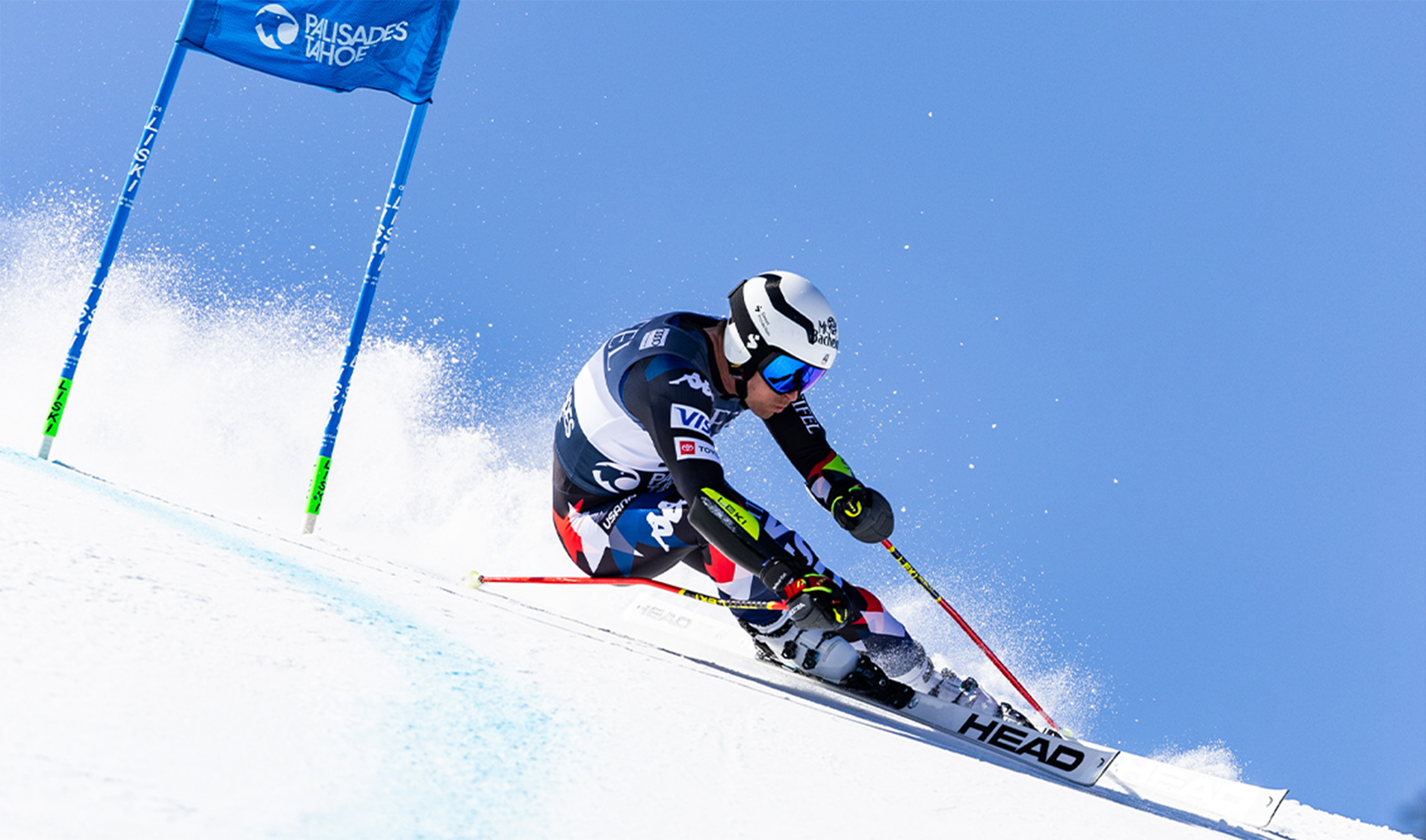
TOMMY FORD ’12
GIANT SLALOM AND SUPER-G
- Bend, Oregon
- Major: Studio Art
- Gold medal, team parallel, 2023 world championships; 2022, 2018, and 2010 Olympics, slalom; 2019 World Cup win
How I started: I learned about Dartmouth early on because my dad was a coach there. Soon after I was born, we moved out to Bend. I started ski racing at 7 or 8.
How things are going now: I had a big injury last January. I broke my tibial plateau and destroyed a bunch of cartilage along with that and tore my MCL. I had surgery and have been slowly recovering since then. I’m starting to feel more like an athlete these days and getting stronger, but I won’t get on snow until December and that’s going to be kind of tight for the Olympics. We qualify based off our current season results, and I’ll miss most of those races before I start even skiing. It’s going to be a little tricky to qualify, but there is some coaches’ discretion involved, and I’ve had a lot of experience for the last 18 years. So there’s a chance still to make the team and compete.
My Olympics experiences: I’ve had the privilege of being in three. In 2010 in Vancouver, I was super nervous and showed up three days before my event, raced it, and left. So it was like, what just happened? It was that crazy. I missed Sochi due to injury. Then I raced in Pyeongchang (2018), which was really cool and cold and really fun too. I think that’s the most normal experience. I was a little more comfortable with it and I raced quite well. It was mixed results, mixed emotions, but my family was there and a lot of friends showed up. I raced in Beijing as well—that was 2022 during Covid in China. That was actually one of the more interesting and fun experiences for me, partly because I was older and more experienced. It was also my first race back after another big injury, so it was kind of intense.
How Dartmouth shaped my career: Dartmouth was a good school for lots of reasons, for ski racing because they have a good skiing team and the quarter system really worked well with a ski schedule. The same year I got accepted I also got named to the U.S. national team. I never actually skied for Dartmouth, but that was a big part of going there—the potential to ski for the team. I studied studio art, with the focus in sculpture, but I did painting and drawing and all that. While I was injured, that was a huge outlet for me. The most similar feeling I could get to skiing was making art. I’ve applied the thinking that I’ve learned at school, especially in art, to skiing and to my approach with training—to learn how to be self-aware and mindful.
What I love most about skiing: I love the feeling of free falling down a hill and making really strong turns on a steep hill. It’s super freeing and very expressive, and there’s something about feeling the forces that you can create in conjunction with the forces that the hill produces, the gravity. It is just like a symphony of force and beauty that is hard to replicate in other parts of my life.
What I hope to accomplish: I’ve been committed to listening to my body and sticking to that through the whole healing process. I don’t want to rush and potentially cause more long-term damage. I trust that my body will let me know when the time is right to ski and to push it. I think that’s a way to move forward.
How I deal with jitters: I definitely have routines. Every environment’s different, but when it gets closer to race time, I kind of lock in a little more consistently. It’s being consistent mentally, staying present, taking time to slow down and just be and enjoy and not overthink. When I start to worry and consider every possible outcome, which happens every time, it is just recognizing those thoughts and not letting your attention anchor on those but keeping it anchored in the present while all heck is going on in your brain. That’s something I can practice whether I’m about to kick out of the gate or when I’m making breakfast.
JASMINE DROLET ’25
NORDIC SKIING
- Rossland, British Columbia, Canada
- Major: Environmental Studies
- Winning relay team, U23 world championships, 2023-24; won NCAA that same year; Dartmouth nominee for NCAA Woman of the Year
How I got started: I’m from an Alpine ski town, so I used to ski with my parents a lot. In elementary school, they took us Nordic skiing during the winter. When I was around 12, I decided to focus on Nordic skiing because my older brother liked it so much. I started getting more competitive with Nordic when I was 13.
Events I hope to compete in: My favorites are long-distance classic races and long-distance skate races.
What I enjoy most about skiing: I just love getting outside, and when you’re on a team with friends, the training doesn’t seem like it’s as hard work as it is.
How Dartmouth shaped my skiing career: Being on the team shaped me in so many positive ways. It really helped me become a better teammate and to appreciate the little things about skiing that aren’t just the results. I’m from a really small town and didn’t have very many teammates growing up, so I was very focused on myself and my own performance—trying to be the best all the time. What I learned at Dartmouth is that the end goal of being the best is not necessarily being the best; it’s for everyone to do well as a team. That was valuable to learn.
What inspired me to try to make Canada’s Olympic team: I was very close last time—the first alternate. I really wanted to make it this time. I think I have a good chance.
The toughest part about training: This summer, after I graduated Dartmouth, I moved to the Pierre-Harvey training center in Quebec. It was just such a different vibe, with a lot more training on your own. It was a little difficult to make that switch and keep the motivation without my teammates. I’m getting used to it now, but I definitely miss Dartmouth a lot—the training atmosphere there is so lively.
If I make the team, the most challenging part will be: That it’s just a really high-level race. I’ve raced a few World Cups and a few under-23 world champs, so I don’t have that much experience under my belt. It might be difficult to keep up if it’s a mass start at the beginning.
How I deal with jitters: I get really nervous before races and have a hard time eating in the morning, so I try to eat more the night before. I try to channel the bad anxiety into good anxiety and remember that a little bit of anxiety helps me feel faster in a race.
My superstitions: I try to avoid them, but I usually go for a short jog in the morning before my race—for 10 minutes just to get the nerves out. I feel I race a little bit better if I do that.
ELISABETH BOCOCK ’28
GIANT SLALOM (GS) AND SLALOM
- Park City, Utah
- Major: Leaning toward History or Economics
- 1st, 2025 U.S. championships, GS; 3rd, GS and team parallel, 2025 and 2024 junior world championships; 14th, Are GS World Cup; four Top 25 World Cup finishes; 1st, 2024 U.S. championships, Super-G; 1st, 2025 Overall GS Nor-Am Cup, 1st, GS and slalom
How I started: I started skiing when I was 2. I have three older siblings, and my parents would always take us out to ski every weekend at Alta in Utah. My mom ski raced in college, so we started racing as soon as we were allowed out of Snowbird Sports Education Foundation and haven’t stopped since!
What I hope to accomplish: This season I hope to qualify for the Olympics in Cortina, secure myself as a top 30 GS and slalom World Cup skier, and earn a medal at the junior world championships.
The toughest part about training: Being away from home for so long. We spend our time from October to April mostly based out of Europe chasing races and snow. We move around a ton, so it is really hard to establish a routine when you are traveling every couple of days. We miss a lot of time at home with family and friends, which is tough for me. On snow, I find that the hardest part about training is trying to stay composed when I am frustrated or not skiing the way I want to. I have tried to work on this and not put so much weight on a single training or race day, but that has come with time.
Most exciting highlight in my career: Scoring my first World Cup points in the Killington (Vermont) GS last season. I have a huge extended family on the East Coast, so there were so many of my cousins, aunts, and uncles cheering me on. I started bib 47 and went into eighth place after the first run, which was a massive shock. I ended up hitting and breaking my hand on the second run but ended the day in 23rd and scored my first World Cup points in front of a home crowd, which was an unforgettable experience.
I’m most proud of: The grit I show through skiing. I have a very aggressive and risky skiing style, so I often will not finish races or have bad crashes, but I have continued to pick myself up after a crash or bad race and keep fighting with the same intensity.
How Dartmouth shaped my skiing career: The College’s quarter system schedule has been the most helpful, allowing me to take terms off to race and train while also get a great education. This schedule was one of the reasons that led me to choose Dartmouth. The professors’ flexibility and willingness to accommodate has allowed me to chase my dream of being a professional ski racer while going to school.
How I deal with jitters: I don’t do anything special to deal with them. I don’t like to take myself too seriously, so I joke and laugh with my teammates. I also like to listen to calming music, particularly the soundtrack from The Nutcracker.
My superstitions: I have tried to steer clear of them, because I don’t want to get too in my head. I do, however, have a specific warmup routine before the race, both on-hill and off-hill. This mostly gets my heartrate up and targets core activation to get my body ready for the slope.
What I love most about skiing: Powder days and freeskiing. Nowadays, I don’t get to do this very often because we are always either traveling, training, or racing. Growing up skiing at Snowbird, I was exposed to some pretty crazy terrain at an early age. I had so much fun chasing around the other kids and coaches, jumping off cliffs, and dropping into chutes. The sense of accomplishment I get when I have overcome something scary like that is really rewarding, and I have a similar feeling at the bottom of a racecourse.
Read more:
ALPINE CONTENDERS
Dartmouth’s top alpine skiers open up about what drives them as they train for the Winter Olympics.
CHASING GLORY
Hoping for an Olympic breakthrough, three cross-country stars have a chance to end Dartmouth’s 100-year medal drought in Nordic skiing.