

In the spring of 2020, Marcela Di Blasi could not make herself sit at her desk. She had a toddler and was pregnant and trying to turn her dissertation into a book. The project was going nowhere.
“I could not bring myself to work on my previous project,” says Di Blasi, an assistant professor of Latin American, Latinx, and Caribbean studies. “I couldn’t even think about it.”
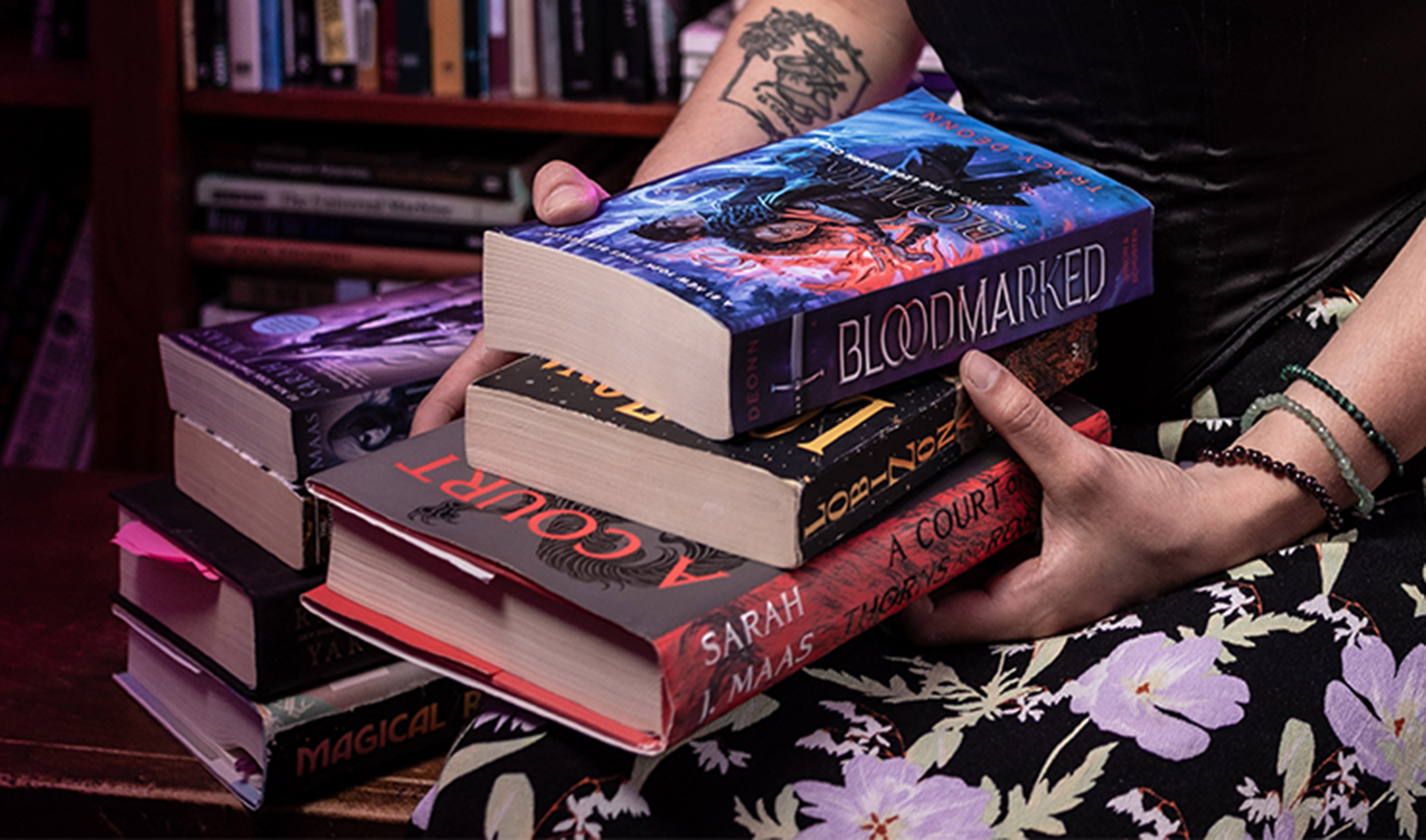
What she could do was read. Her sister-in-law had recommended Sarah J. Maas’ A Court of Thorns and Roses, which Di Blasi calls the gateway drug for readers of romantasy, an increasingly popular genre in which falling in love and remaking the world are inextricably linked.
She began looking beyond the books to fan communities on BookTok and Bookstagram. “If this is part of something that’s happening, that’s interesting,” she recalls thinking.
What started as a pandemic distraction turned into a research subject. She started over in 2023 on a new book, Love and Other Worlds. It became the foundation for a class exploring power structures, race, gender, and political resistance. Hardly anyone signed up.
Her department chair suggested the name of the course—Speculative Pasts: Latinx Fantasy—could have been the problem. Di Blasi retitled the course Reading Romantasy and went from worrying about filling seats to managing a waitlist.
“You always want to believe that the substance of a course is what’s going to communicate to students,” she says. “But no; they actually need a title. Y’all need a title that makes it clear what you’re doing. Otherwise, you’re just going to keep scrolling.”
Changing the name may have gotten students through the door, but Di Blasi knows they stay because of the opportunities to think critically about books often dismissed as trivial. Even the genre’s defenders tend to argue past the romance. They will point out that a series is really about revolution and quietly concede that the love story is the embarrassing part.
Di Blasi rejects the embarrassment.
“If you want to talk about what romance really is, it is a genre that tells us about how people want to live their lives,” Di Blasi told The Washington Post last year.
When she teaches Rebecca Yarros’ Fourth Wing, Di Blasi puts love interests Xaden and Dain side by side. “Who you fall in love with shapes how you understand the world around you,” she says. The romantic choice, in other words, is also a political one.
The story is set in an elite war college, complete with telepathic dragons and an enemies-to-lovers trope. It follows Violet Sorrengail as she trains to become a dragon rider while navigating a love triangle between her overprotective, rule-abiding best friend Dain and the lethal, yet intriguing wingleader Xaden.
Dain is a type students recognize. “So many have a version of that guy in their lives,” Di Blasi says, “the guy who, from his perspective, has done nothing wrong and doesn’t understand why this isn’t working.”
“You don’t have to be a bad person to do terrible things,” she says, describing the dawning realization in her classroom.
She invites students to explore this dissonance in their own lives. Curated playlists and world-building maps extend the same question beyond individual characters: How can a person or an entire society seem reasonable from one perspective and deeply unjust from another?
“People talk about romantasy as though it’s reducing good and evil to a binary,” Di Blasi says. “It’s really not. It’s complicating things and inviting readers to engage with that nuance and think about their personal responsibility.”
Pari Sidana ’28 says that Di Blasi is “unafraid of being honest and, in turn, students feel comfortable being honest with her.” Sidana says the class helped her better understand a genre that is often dismissed as “unserious.”
Ask Di Blasi whether romantasy will last, and she will gently correct the premise. The genre has origins in the Gothic, dating back to the 1700s, so she was not surprised to see Wuthering Heights adapted again. “There are all kinds of ways that it touches on different things,” she says. “I don’t see it going away as a genre.”
Compliment her dragon tattoo and Di Blasi will tell you she and a friend got matching ones at an academic conference for no reason except that they are “insane nerds.” Publishing trends may come and go, but this one is leaving a mark.
Reading Romantasy will be offered again this winter. Di Blasi posts on Instagram as @romantasyprof.
Isabelle McLean is a double major in film and media studies and philosophy, politics, and economics. She took Reading Romantasy last spring.