In this era of rising income inequality, we hear a lot about the top 1 percent, with news often focused on the excesses of famous billionaires in the Forbes 400—superyachts, giant homes on multiple continents, and, sometimes, a history of short-changing workers. In their timely and eye-opening new book, coauthors Zidar and Eric Zwick shed much-needed light on the rise of a slightly less wealthy (but still fabulously rich) group of Americans they call “Main Street millionaires.”
These high earners, who collectively control nearly 13 times more wealth than their elite counterparts on the Forbes list, have mostly flown under the national radar—until now. Using advanced analytical tools to access and interpret a mountain of government records and other data along with plenty of basic shoe-leather reporting, the authors paint a detailed picture of the roughly 3 million private business owners whose average net worth is around $25 million.
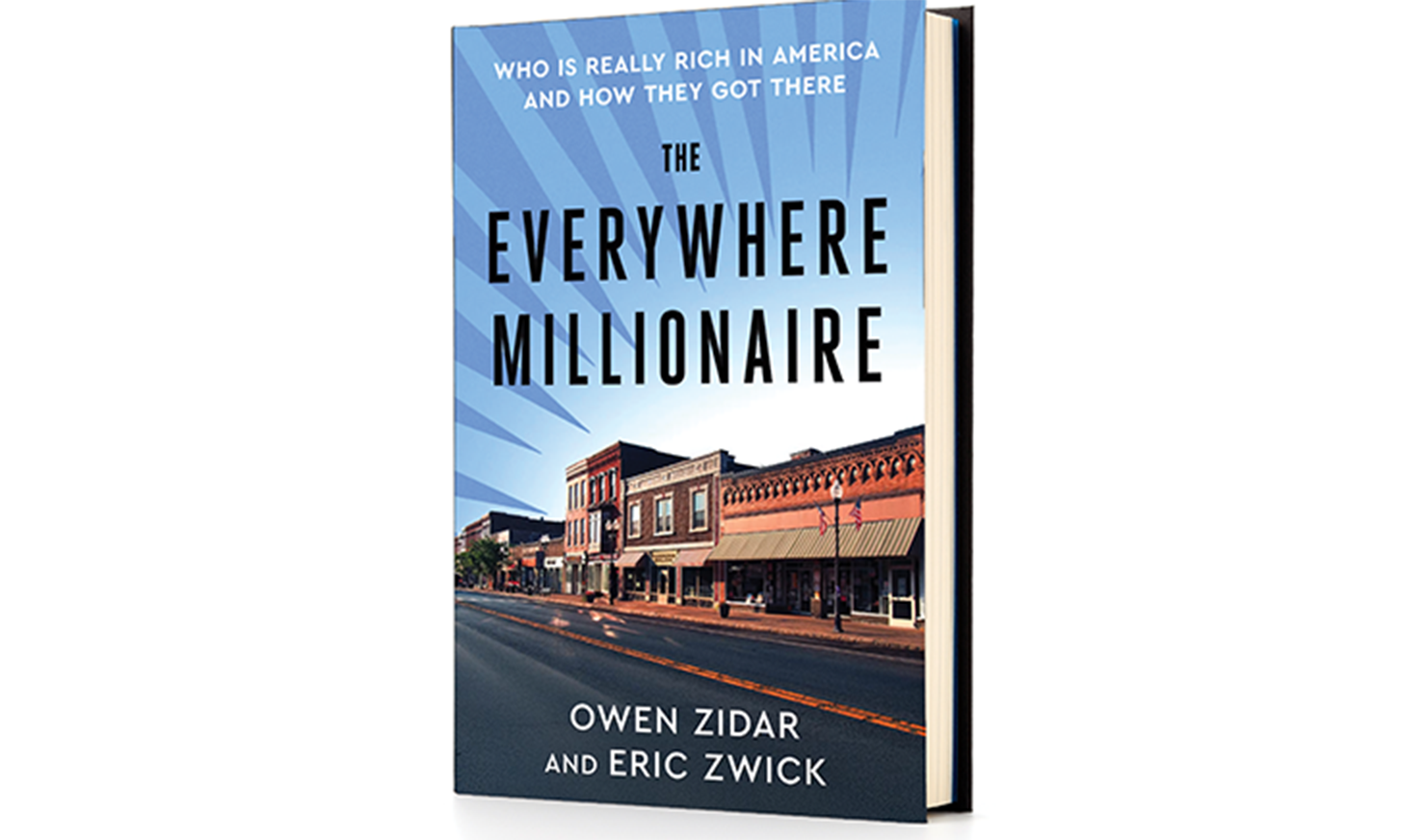
Unlike the very richest Americans, half of whom are based in the biggest cities, comparatively anonymous Main Street millionaires are spread out in smaller communities around the country. Benefitting from Reagan-era tax reform, almost all own mundane “pass-through” businesses, which don’t pay corporate or dividend taxes. They are private-practice doctors and dentists, auto dealers, real-estate developers, restaurateurs, consultants, and the like. Many are entrepreneurs who built businesses from scratch (and were able to access the necessary startup capital), while others expanded from a base of inherited wealth.
Zidar and Zwick profile many individual Main Street millionaires, chronicling the ups and downs of their careers. Some of the most colorful include Nancy Mueller, who started out catering Junior League parties before founding a frozen mini-quiche company with annual sales of nearly $60 million, and Dick Portillo, a hot-dog truck owner who built a billion-dollar restaurant empire in the suburbs of Chicago.
The most sobering part of The Everywhere Millionaire comes near the end. The authors lay out how many rich business owners create jobs and share profits with workers. Others line their pockets by paying miserly wages, failing to provide adequate health insurance, and shackling even low-level employees with noncompete agreements. Still others use their wealth and power, often secretly, to influence policymaking to stifle competition and become even richer. The authors show us how.