

Christopher Wren ’57 had spent less than a year as a metropolitan reporter at The New York Times in 1973 when editors started asking around the newsroom, “Does anyone speak Russian?”
Wren quickly spoke up. He had taken several years of Russian language and literature classes as an undergraduate in Hanover. “I could have majored in Russian, but I didn’t think anyone would ever hire a Russian major, except the CIA,” Wren said in a 2005 interview with Vermont Public Television. “I didn’t want to be a spy.”
By late 1973, Wren and his wife, Jaqueline, and their young children Celia and Christopher were living behind the Iron Curtain. They were joined by Henrietta, the family’s half-Siamese cat, which became a prominent character in Wren’s 2000 memoir of his career abroad, The Cat Who Covered the World.
Wren’s posting in The Times’ Moscow bureau launched him on a lengthy career as a foreign correspondent with the paper, serving as bureau chief in Moscow, Cairo, Beijing, Johannesburg, and Ottawa. “My dad might have eventually become a foreign correspondent anyway, but he certainly got there a lot faster because of his experiences at Dartmouth,” says daughter Celia, a freelance arts journalist in Washington, D.C.
Overall, Wren spent 28 years with The Times. After he retired in 2001, he and his wife moved to Vermont, where they owned a second home and he lived until his death on February 15, 2026, a week shy of his 90th birthday.
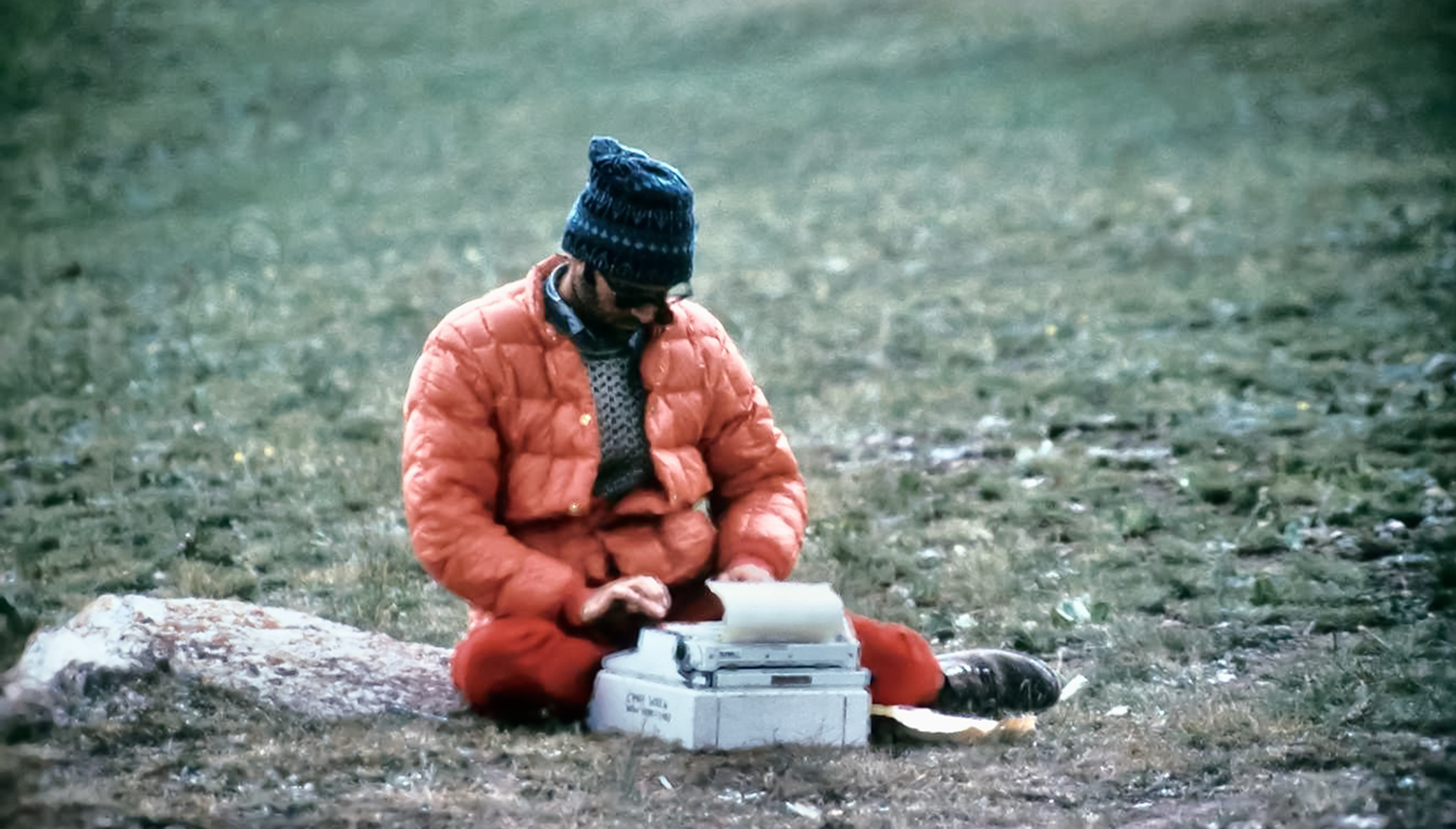
During years of overseas reporting, which began at Look magazine in 1961, Wren was known for getting to the heart of a story even when it placed him in harm’s way. He covered six wars, starting with Vietnam, where he made four reporting trips. Wren had served in the Army after graduating with a bachelor’s in English and trained as an Army Special Forces paratrooper with the Green Berets. His background gained him instant credibility with soldiers in Vietnam, allowing him to crawl with them through rat-infested jungle tunnels and join their poker games at remote outposts.
Early in his career, Wren reported on the civil rights struggle of the 1960s in Mississippi for Look, where he spent 10 years before the national magazine folded. In 1979, The Times dispatched him to Tehran to cover the Iran hostage crisis.
“Journalism is a great way to perpetuate the curiosity you developed as a child,” Wren once wrote. “I talked my way through encounters with guerrillas and their AK-47s in Lebanon and Somalia, met drug thugs in Colombia and Burma.”
When asked about the life-threatening dangers he sometimes faced in the field, Wren downplayed the encounters. He simply saw himself as a journalist trying to give voice to everyday people caught up in distant wars and political conflicts not of their making. “When I [went] to these places, I had a flak jacket, thousands of dollars in a money belt, a U.S. passport, and a newspaper that would try to get me out if I got hurt,” Wren said in the 2005 Vermont Public Television interview. “The people I was covering didn’t have that luxury.”
Upon hearing of his death, Wren’s former colleagues shared remembrances in Facebook posts to his family.
Wren was “charming, helpful, and—exceptionally rare in a journalist—modest,” wrote Joyce Wadler, a retired Times columnist. He was an “inspiration to all of us,” adds Elaine Sciolino, a former Times bureau chief in Paris. “I met Chris for the first time as a brand-new foreign correspondent at King Hussein’s wedding in Jordan. I was struck by how learned and kind he was.”
Born in Hollywood, California, Wren was the son of actors, a profession that didn’t always guarantee a steady income. “Sometimes we had money, sometimes we didn’t,” Wren said in a 2018 interview with the Lebanon, New Hampshire, Valley News.
Dartmouth offered Wren a full scholarship, but he still needed spending money. He signed up for ROTC, which paid $27 a month, and worked as a waiter at what was then the Green Lantern Inn on South Main Street.
Before arriving in Hanover, Wren was assigned roommates Wallace Ackley ’57 and Frank Andrews ’57. They were so well matched they chose to live together for all four years. “We became like family,” says Ackley of Westwood, Massachusetts. He learned that Wren had many strengths, but “one of them was not housekeeping,” he said jokingly.
Dartmouth not only spawned Wren’s interest in everything Russian, it also was where he developed a passion for outdoor adventures. Wren became part of a tight-knit group of student rock climbers who explored mountains and cliffs throughout Vermont and New Hampshire. For a speech-writing class that he took with Ackley, Wren put the journalism adage of “Don’t Tell Me, Show Me” into practice. Wren concluded his presentation on rock climbing by securing a rope to the classroom’s radiator and rappelling out a third-floor window. “Everyone was aghast,” Ackley said.
For kicks, Wren and his fellow climbers would scale 71-foot-tall Bartlett Tower in College Park and rappel back down. “Liability wasn’t a big thing in those days,” says Sam Silverstein ’58, who became a physician and world-class mountaineer. (In 1962, Silverstein and Wren were among the first climbers to make a successful ascent along the southeast spur of Mount McKinley—a.k.a. Denali—in Alaska.)
In 1974, shortly after moving to Moscow for The Times, Wren joined a group of American climbers on their mountaineering expedition in the towering Soviet Pamir Mountains. As they neared the summit of 23,400-foot Lenin Peak, the group discovered the bodies of an all-female Soviet climbing team gone missing during a sudden blizzard. Soviet authorities had managed to keep the deaths of the eight women a secret from the world until Wren’s exclusive story appeared on The Times’ front page.
In retirement, Wren continued to write, finishing his last two of a half dozen critically acclaimed books on subjects that ranged through the years from the failure of communism to an autobiography of country singer Johnny Cash.
After Wren moved to Vermont, Dartmouth sought him out to teach writing in its MALS program.
While Wren’s war stories were instant attention grabbers, he made sure the students didn’t lose sight of a journalist’s ultimate objective.
“You write,” he told them, “because you want to make a difference.”