


Yin Zhao ’06 was feeling down. A year or so after graduating from Dartmouth, with the “Great Recession” gathering steam, the art history major lost her job preparing antique watches for auction at Bonhams in Los Angeles. With prospects in the art industry looking grim, Zhao decided to walk away from her Hollywood apartment and retreat to her childhood home in the Bronx.
New York wasn’t exactly teeming with art-related work either, forcing Zhao to take a job as a Wall Street researcher to make ends meet. Long phone calls to Beijing analysts about pork prices filled some days, but there was still plenty of time to wonder about what might have been.
“I started thinking I should have studied something more practical,” says Zhao, who next considered going to law school in part to please her parents, both of whom work in the medical field. “I just didn’t know what I wanted to do.”
But in 2011, just when Zhao thought art history was becoming part of her past, she scored a plum job at Sotheby’s organizing sales of such treasures as landscapes by Claude Monet, rubies worn by Queen Marie Antoinette, and vintage cars. Suddenly, she was surrounded by colleagues more creative than quantitative—and realized she had at last discovered her tribe.
“I was very fortunate to finally find a path,” says Zhao, now an independent advisor to Chinese collectors, “but I never really regretted my major.”
At a time when some students—and their parents—are openly questioning the value of the liberal arts, DAM tracked down every Dartmouth art history major from the class of ’06 to ask a simple question: Would they change their major if given a second chance? Only three of the 20 work directly in the field of art history; two others are employed in architecture and interior design. Some, like Zhao, have had to hustle to find jobs in the field.
But most of Zhao’s peers from ’06 strongly defend their study of Renaissance oils and Art Deco murals, even if the classes have little bearing on their current professions, which include management consulting, telemedicine addiction treatment, cosmetics, biomedical informatics, and dessert-making.
At the midpoint of their careers two decades after leaving Hanover, the group might be prone to second-guessing: Before graduating, they never scrolled on an iPhone or shared a like on Facebook, and their education focused more on the past than the future. Since then, society has become relentlessly more digital, and they’ve had to grapple with an increasingly screen-filled, algorithm-driven world.
Yet these alumni don’t feel they’ve missed the technology boat. Rather than regretting computer science classes they never took, the ’06s are grateful for courses that taught them how to connect cultural dots, memorize mass quantities of images, and appreciate the power of a visual explanation of an abstract concept.
Their votes of confidence come at a fraught time for art history and the humanities in general: These fields of study are suffering from prolonged drops in popularity as students gravitate toward math and science curriculums and schools redirect resources.
Only three of the 20 art history majors in the class of ’06 work in the field today, but many say the value of their education can't be measured by their career choices.
Some critics question the whole premise of a liberal arts education, which promises, as President Sian Leah Beilock likes to say in its defense, to teach students how to think rather than what to think. To skeptics, a liberal arts education is a little-bit-of-everything, salad-bar approach that doesn’t do enough to prepare graduates for careers. Some have gone even further, questioning the value of college overall.
But many of the art history majors say the liberal arts are more crucial than ever in a world where chatbots and other digital assistants increasingly seem able to do the thinking for us.
“I think it’s an enormous travesty that humanities are being shredded, because no one knows how to think anymore. We should be pushing them instead,” says Meredith Raucher Sisson ’06, who went on to complete a master’s and Ph.D. in art history from Johns Hopkins University. She switched gears when she encountered few openings that matched her medieval focus and today works for Virginia Commonwealth University, where she advises students applying for Fulbrights and other fellowships.
“Art history tells you how to look at things with a critical eye, to think about what kinds of questions those questions can lead to,” Sisson says. “It’s a very helpful degree for anything that requires critical thinking.”
Under Pressure
On campus, art history isn’t what it used to be. Compared with the 20 art history majors in the class of ’06, including some who completed double majors, there are just 10 in the class that will march across the Green in June. Data from the registrar's office shows that art history has the same number of majors as religion and French—a total on par with the last few years.
Economics, the most popular major choice for years, is again on top with 196.
Art history department chair Nick Camerlenghi acknowledges that the number of art history majors—and art history professors—has declined during the past 20 years as other disciplines, including “some we couldn’t have imagined 20 years ago,” draw students. However, he points out the art history faculty is offering 37 courses this year, compared with 30 in the 2005-06 course catalog, giving students wide access to art history, even if it’s not their major.
Few would question Dartmouth’s commitment to the liberal arts, a foundation of its existence. But college administrators pay attention as the approach falls out of favor elsewhere in the face of diminished budgets and dwindling enrollments. The University of Alaska, West Virgina University, and Marymount University in Virgina, among others, have sharply reduced their liberal arts classes in recent years. Other institutions may not be killing off liberal arts entirely but have given courses a striking facelift. New Jersey’s Montclair State University has restructured the English, classics, and philosophy departments, lumping those classes under one broad, humanities-themed umbrella. Even more extreme, some longtime liberal arts colleges recently shut their doors for good, including Goddard in Vermont and Wells and Cazenovia in New York. All three had struggled to attract students, in part due to the “demographic cliff” of a shrinking teenage population.
Universities have also come under broader attack by a powerful alliance of Washington, D.C., leaders and Silicon Valley moguls. College degrees are, to many minds, “an obsolete and expensive credential,” U.S. Education Secretary Linda McMahon said late last year. “Don’t they realize? The alternatives to college are warming up in the dugout.”
Palantir, a security data tech firm, recently launched an experiment to create one of these alternatives: a fellowship program to encourage high school graduates to skip college and instead work for the company after completing a curriculum that includes a four-week Western civilization seminar followed by software engineering projects.
Such experiments by big tech firms to disrupt education for profit also reflect the public’s mood when a year of college can cost up to $90,000. According to a Politico poll from December, 62 percent of Americans have concluded that college is no longer worth it because it doesn’t provide enough bang for its big bucks.
“What a shame,” says Brian Martin ’06, about the shrinking number of art history majors at Dartmouth. A double major in government and art history, Martin works as a public-interest lawyer for the U.S. Federal Reserve in consumer protection. Although his major may have never been a factor in his career, Martin still rhapsodizes about the 10 art-filled weeks he spent as a sophomore in Florence, Italy, on a foreign study trip, a term he recalls as his best.
There have been other upsides. Having to explain the reasoning behind Botticelli’s 15th-century painting techniques gave Martin the ability to describe amorphous, modern-day concepts such as cryptocurrency with precision. Likewise, he says, regularly considering other people’s perspectives, as humanities classes frequently ask of students, has made him a more empathetic listener, a vital job skill.
“It’s troublingly limited to be in an academic silo from the start,” Martin says, referring to more career-oriented educational paths. “You should spend four years studying what you want to study. And I hope I have the wherewithal to tell my children that.”
Subtle Shifts
Yet, the ’06 art history majors, many now parents themselves, recognize the vibe shift in how some people talk about higher education. “My dad, who graduated in 1978, used to say, ‘Do what you love,’ and I would say, ‘That’s not very directive,’ ” Jen Holland ’06, Tu’12, says. “How many parents are saying that same thing these days? I don’t know.”
When it comes to her daughters, Holland has encouraged extracurriculars that stress science, math, and robotics, in part because those skills help today’s students advance, she says. Similarly, consulting powerhouse Bain, where she worked for years devising strategies for private-equity clients, prefers recruits better with numbers than languages. “Quantitative skills are just such an important part of the job,” says Holland, who supplemented her art history degree with economics.
After Hanover, Holland worked briefly as an art consultant, advising corporations on their collections. But business plunged 60 percent when the Great Recession hit, which led some clients to liquidate their collections to stay afloat, says Holland, who in the aftermath headed to graduate school at Tuck.
“If I had to do it again, I would have leaned more heavily into economics,” she says, although she admits art history did not create hurdles. “You can learn the technical stuff along the way, no problem.”
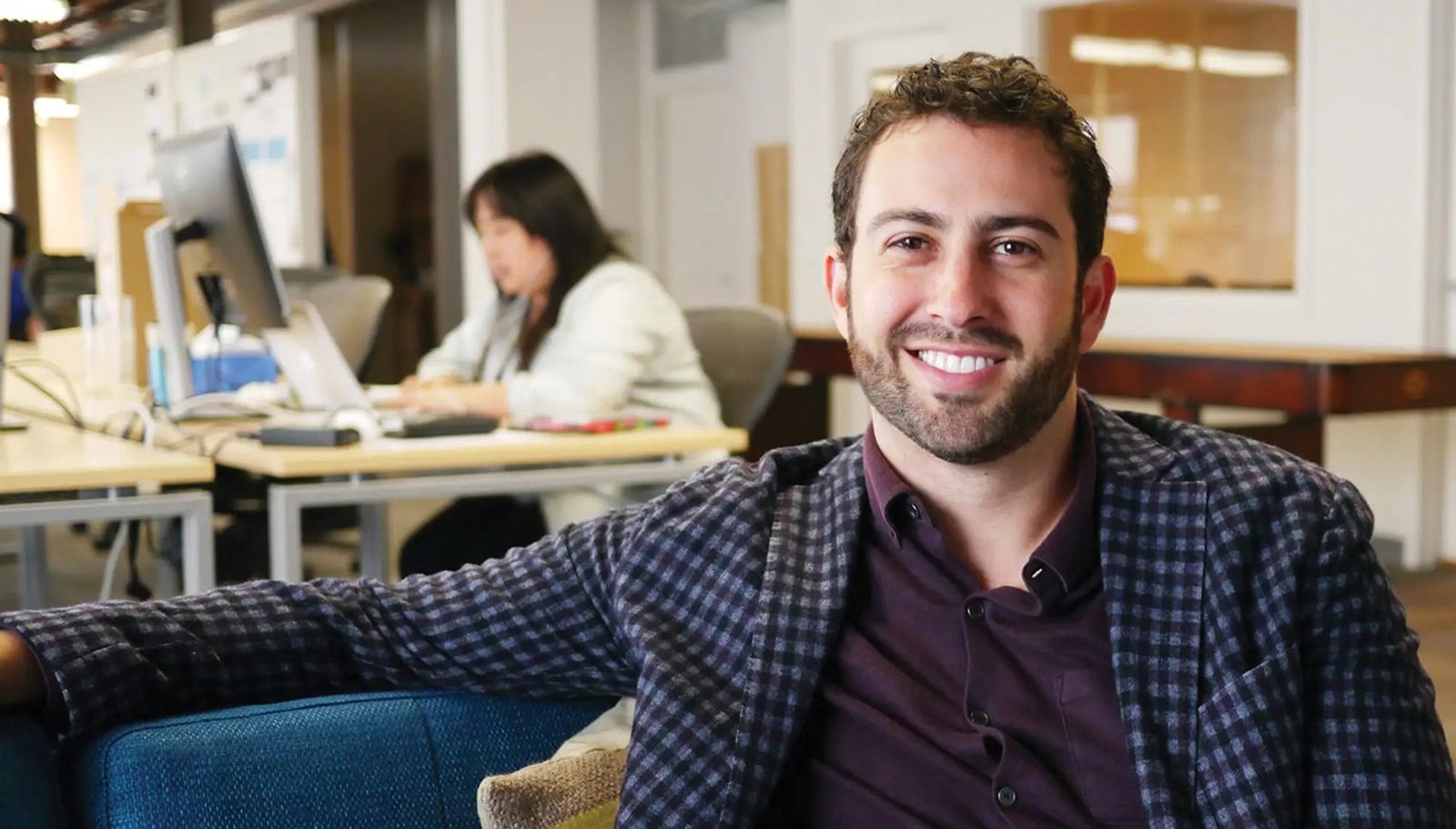
For others who ventured in a non-arts direction, the major’s impact has sometimes revealed itself in unexpected ways. Zach Goldstein ’06, the founder and CEO of Thanx, a loyalty-based tech marketing platform that caters to restaurants, describes himself as a come-what-may student who bounced between calculus, chemistry, and classics classes before settling on a double major of government and art history with a minor in psychology. He also did a stint at Bain, before enrolling in Stanford’s business school.
Goldstein is a “horrendous artist” by his admission, but he was responsible for shaping the look of Thanx’s website for years. Recently, a more creative colleague asked, “Do you think your art history degree allowed you to have just enough design sense and context to be dangerous in that part of your job despite not having any design skill?” Goldstein says he realized the answer is yes.
“I think art history has helped enhance the creative side of my brain,” he says.
Mood Swings
After a long, low period, the tide may be turning slightly back toward the humanities and, by extension, art history, some ’06s say. Companies that relied on humans to write computer programs are switching to artificial intelligence for their needs, taking some of the pressure off undergrads to take highly quantitative STEM courses.
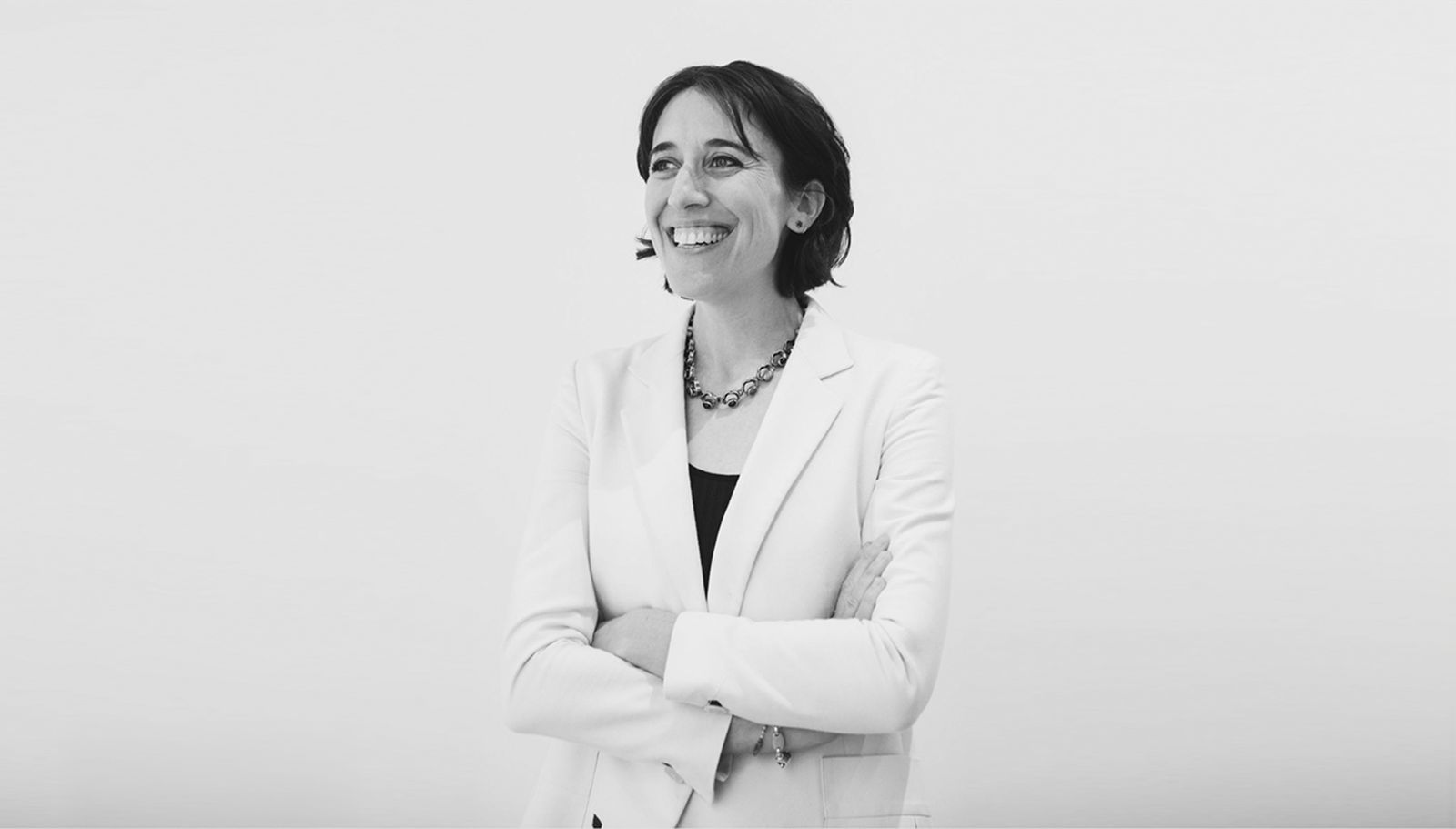
“Maybe current or future students will realize they don’t need to code because AI will do it for them,” says Elisabeth Sherman ’06, the chief curator of the Museum of the City of New York who previously held top jobs at the city’s International Center of Photography and the Whitney Museum.
Department chair Camerlenghi believes there’s a momentum shift, too. Open houses for potential art history majors today draw more people than a few years ago, he says.
For Sherman, unlike most of her peers, a job outside museums never really seemed in the cards. After “falling in love” with high school art history classes, she arrived in Hanover laser focused. Other than a brief year at an Anthropologie clothing store, she has concentrated exclusively on art. She interned at New York’s Museum of Modern Art twice while at Dartmouth, then earned an M.A. from London’s Courtauld Institute of Art. For someone whose thesis subject was surrealism, Sherman’s ability to survive and thrive in a small and competitive field can feel otherworldly—even to her. “This is not like law or medicine, where there’s a pretty clear path to follow,” she says. “There’s some combination of hard work and talent, sure, but also luck, being in the right place at the right time.” Sherman credits her husband, a New York lawyer, for providing financial support during some lean early years.
Sherman has great sympathy for those who couldn’t hang on long enough for their gallery or museum dreams to pan out. “With the recession, our class realized that nothing is guaranteed,” she says. “They’re tilting toward security and financial success for very understandable reasons.”
Still, she wishes today’s undergrads were more in the moment. “I loved learning about a lot of things and understanding the world through different prisms. For the generation behind me, that’s been devalued.”
So gung-ho is the ’06 art history cohort that even some who faced money pressures and other setbacks, such as Cory Claus ’06, sing the major’s praises. He entered Dartmouth at the age of 37 after transferring from a California community college.
Student loan debt did “hang over my head” after graduation, he says. On top of that, Claus for years deferred plans to become a documentary filmmaker to care for his wife after she fell ill and became disabled, he says. They are now divorced.
When he entered the workforce again about a decade ago, Claus became a high school teacher, offering lessons in English and history to students in the New York suburbs while writing historical fiction books on the side. He also occasionally pens magazine articles about art; one published in 2024 held forth on six works inspired by Edouard Manet’s Luncheon on the Grass.
An unapologetically glass-half-full type, at Christmas Claus capitalizes on his unusual last name to play Santa at children’s hospitals and convalescent centers. In the same vein, he also recently launched a dessert business, Mrs. Claus’ Sweets and Treats, based on his grandmother’s recipe for bite-sized snickerdoodles.
“It’s been a real lifesaver to have studied liberal arts, so enriching to spend time thinking about the things that are most interesting and important,” says Claus, who adds that if his choice to focus on the history of art has somehow made him less likely to be hired, so be it.
“Life is not about money. The goal of life is to fill your moments and minutes with happiness,” he says. “We get so few years to be alive.”
C.J. Hughes is a freelance writer and member of DAM’s editorial board.
Editor's note: This story has been updated to clarify that 10 art history majors will graduate this June.