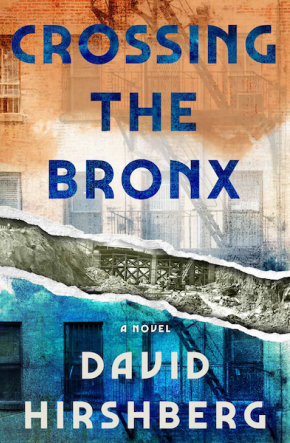
Writing under the pen name David Hirshberg, Price offers a colorfully gritty tale of two brothers who find themselves at odds regarding the impending destruction of their neighborhood while the city is being torn apart by Robert Moses’ construction of the Cross Bronx Expressway in the 1950s. Price’s two previous historical novels have won 18 awards, and reviewers have likened his storytelling prowess to that of Michael Chabon and Saul Bellow.
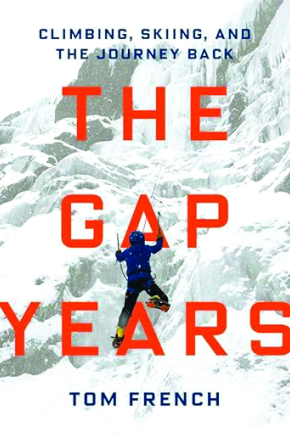
After a four-decade career in business, French returned to pursuits that had been passions in his youth: mountaineering, cross-country skiing, and adventure travel. What started as a “gap year” grew into a three-year odyssey, during which he competed in three ski marathons and climbed some of the world’s highest mountains, including Everest. His reflective memoir redefines what retirement can mean.
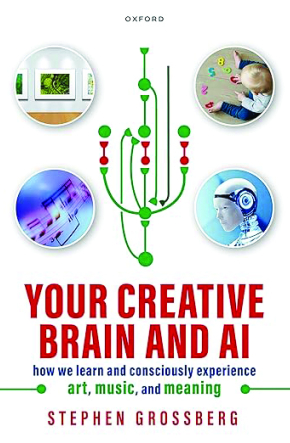
The professor of cognitive and neural systems at Boston University—renowned for introducing the concept of the brain’s neural networks when he was a freshman in 1957—explains how those networks enable consciousness, creativity, and meaning. He describes how the human mind learns and experiences visual art, music, and languages, drawing a sharp contrast with AI systems such as Deep Learning and ChatGPT. He also offers a road map for securely implementing autonomous adaptive intelligence into engineering and technological advances.
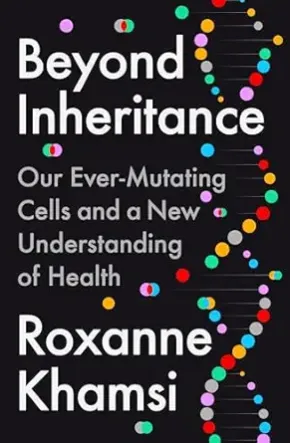
In this groundbreaking book Khamsi—a science journalist and contributing writer at The Atlantic—reveals how hidden mutations in our bodies, once regarded as flaws, can redefine medicine and aging. She shows how the DNA in our cells is in constant flux and that some mutations may be harmful while others can strengthen us. She contends a dynamic view of genetics—embracing the upside of mutations—can help usher in a new era of medicine, including better vaccines and treatments that defeat cancer and possibly ward off some symptoms of aging.
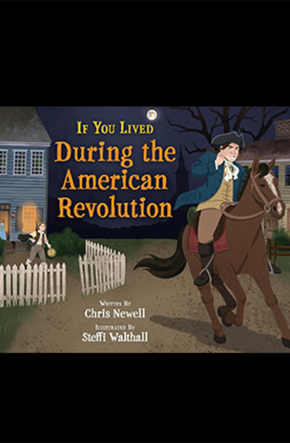
If you lived during the Revolutionary War, what would you wear, what would you eat, and how would daily life be different? In this appealing book in a Q&A format, with kid-friendly illustrations by Steffi Walthall, Newell spurs young readers to dive deeply into the country’s origins, taking care to explore all sides of the historic events. A member of the Passamaquoddy Tribe in Maine, the author is a longtime member of the Mystic River singers and well known for leading annual Pow Wows on the Green. He was the first Wabanaki executive director of the Abbe Museum, Maine's only Smithsonian-affiliate, and later served as education supervisor at the Mashantucket Pequot Museum and Research Center in Connecticut.
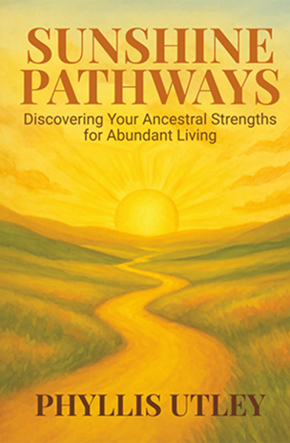
The author, a member of the Ye Iswa People of the River Otter Clan, urges readers to cherish their heritage, to explore their lineage, and to reclaim cultural pride in their ancestors. She contends that doing so will lead to prosperity and generational wealth. Her book also features her poetry.
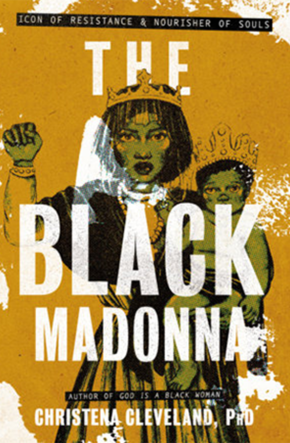
The author, a social psychologist and author of God Is a Black Woman, blends history, mysticism and feminist theology in a book that radically reimagines the divine and invites readers beyond traditional religion into a liberating spirituality.